The Ojha Sanatorium Karachi

By 
Amin H. Karim MD
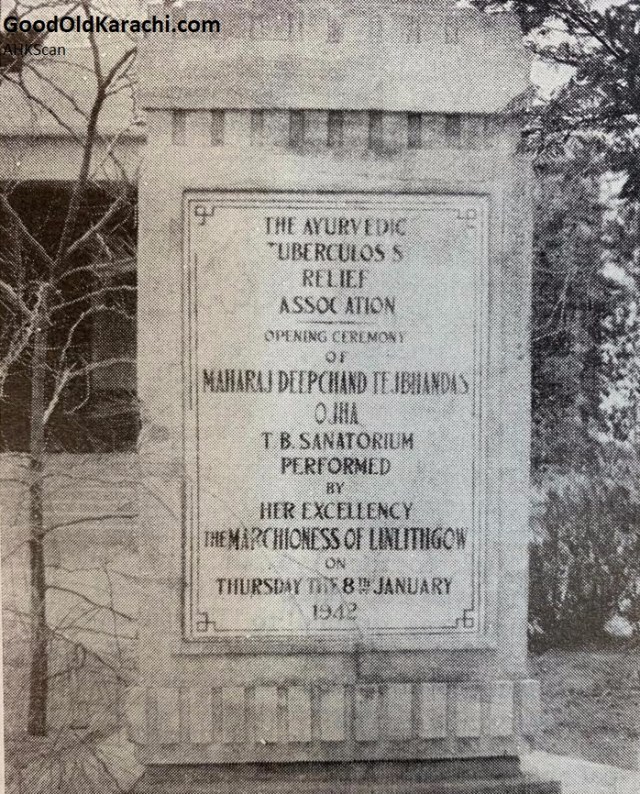
OJHASanatoriumStone

THE TB OJHA SANATORIUM, KARACHI: DEEPCHAND TEJHANDAS OJHA was a well known philanthropist of Karachi, He belonged to the renowned family of Ojhas whe were vaids by profession. He died in 1928 of TB and donated his property; Ayurvedic TB Relief Association was founded with Mr. Jamshed Mehta as its President. Government donated 127 acres in Safooran Goth which is about 20 km NE of Karachi city. It was developed in the TB Sanatorium with isolated cottages for advanced TB patients. In the second world war it was used as Prisoners of War Camp, Polish Refugee Camp for Jews, War Children Refugee Camp, and American Army station. In October 1946 TB patients were re-admitted. Incidentally Streoptomycin was discovered in October as posted by Dr. Sohail Ansari earlier. in 1970s when we from Dow Medical College rotated there for training Dr. Mohammas Iqbal Yaad Marhoom was the Director. His daughter Rahila Iqbal Yaad was in our class in Dow. She passed away a few years ago. The entire history by Dr. Yaad of the center is in the DowLite International that is in the files here. Above is a synopsis. I found another interesting fact: When they were surveying the land in this area they discovered corals and sea shells showing that centuries ago the Arabian sea covered this area and then slowly receded.
The campus now has the prestigious Dow University of Health Sciences (DUHS) and Dow International Medical College. All three institutions are in the 127 acre campus in Safura Goth.

YaadIqbal

Photo and details credit to DowLite International Souvenir 1970.

Posted in Contributions by Hindus, HealthCare Institutions | Leave a comment

Shamspir Island and the Fishermen We Knew

By Wayne Croning

IslandsOfKarachi

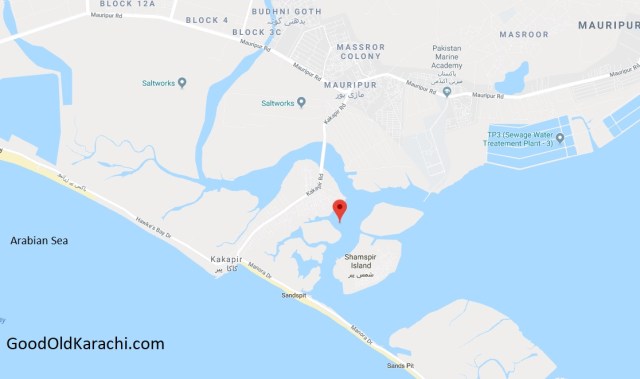
Located along the backwaters of Sandspit, Karachi; the Island of Shamspir is a heavily populated fishing hamlet, larger than Baba or Bhit Island that are located in the Kaemari harbour area. It is an isolated island with no roads connecting to it, no running water, no electricity. (have things changed? maybe …) People on the island live a poor and simple life.

In the mid 1970’s we (my late friend David’s family and my family) got to know some of the local fishermen that lived on the island. It began one hot summer’s weekend when both our families decided to spend a weekend at Sandspit. This time we had not pre-booked any beach hut, and by the time we got to the beach, it was getting dark and no watchmen were around. So decided to squat in the driveway of a grey concrete hut that faced the Sandspit backwaters. We lit a small wood fire and spread some durrees (rough carpeting) on the sand.

A cool ocean breeze began blowing from the South. The sound of waves crashing on the shore, added to the calm and serenity I always feel when near the sea. In the distance I could see the blinking lights  of Kaemari harbour, and out to sea, the lights of anchored ships also blinked back at us. Those far off ships were probably waiting for clearance to enter the harbour area.

As we sat around enjoying the warmth of the wood fire, a man approached us from the Sandspit road; he wore a white, loose fitting shalwar kameez and as he approached, we thought he was going to tell us to leave; instead, he came up and shook hands with the men, using both his hands and  drawing them to his chest each time he did.

“My name is Fakir Mohammad; but my friends call me ‘Fakira’. Are you looking for a hut”? He asked uncle D.“Yes we are; but no one was around so we decided to stay right here on the beach” Uncle replied.

“If you like, I can rent out that wooden hut”. Fakira added, pointing to a small wooden beach hut with a covered and enclosed verandah, but it was on the other side of the beach facing the back- waters and mangrove forested area.

“That’s fine, we will take it” said Uncle D; and after settling on a very reasonable price for
the weekend; Fakira took us over to the hut, unlocking the side entrance. We began moving our stuff into the hut and were soon settled in. David and I lit the two kerosene lanterns and soon the little hut was illuminated by the soft glow of the two lanterns, casting shadows on the wooden walls. The whole hut was constructed of wide wooden boards, with gaps in between that let in cool, fresh sea breeze. The roof was corrugate d tin, rusting in places. It had three windows in the large room where we made our beds and eating arrangements. The covered veranda we used to
store extra beddings and blankets.

That night, after settling in the hut, we made our way back to the beach and our campfire; Fakira stayed with us most of the night. He worked for the KPT and was basically a ‘Chowkidar’ or security guard for a number of the beach huts. He told us stories all night; of growing up, ghosts and life on the nearby Island of Shamspir, where he lived.

We soon got to know that he was related to Ali, a long acquaintance of Uncle D. Many years ago Ali had saved a man from drowning at Sandspit. This is when uncle D and his family got to know the burly fisherman/KPT worker. It was almost midnight when Fakira bid us a good night and got into his little wooden boat, paddling his way back to the island. In the dim moonlight, we caught a glimpse of him, white kameez still visible from where we stood. He had promised to bring Ali back with him in the
morning.

We got back in the hut; David and I snuck out for our stroll along the beach (a smoke of course). All we had were two packs of bidis (ugh, yes, Babu Bidi) and some stolen Hylites from Uncle D. Hylite was a lot better than Babu Bidi, and David’s brother smoked Woodbine (not the best kind of ciggy) and his mother smoked Peela Hathi (lol) filterless and two big ughs for this. Uncle D was always puzzled as to how his
cigarette stock kept depleting.

“What!! I was sure I had a full pack last night!” we heard him complain in the morning.

David, his sister E and myself soon went off for our early morning walk. This time to the wooden pier, where David pulled out a Hylite and lit up. Taking a few puffs, he handed it to me; I took a few puffs and then E took it out of my hand and began smoking herself. After our smoke we walked back to the hut and saw a boat approaching us from the island. We soon saw it was Fakira, with another man and two small children. They all got off as soon as the boat was beached.

“This is Ali.” said Fakira, introducing the big barrel-chested man. Ali was tall,dark and muscular. I could guess he was around 40 years old, and the two young boys were his sons, maybe around 8-10 years old.

We escorted them to the hut and soon had a pot of tea going. Uncle D recognized Ali from years ago and they began a long conversation. Uncle D’s Urdu was terrible, but he spent about an hour chit chatting with the two men. Ali suggested that we move into the concrete grey hut, almost directly across the wooden one and it was on the main beach that faced the sea. We were more than happy to make the move. The grey hut had two large rooms, a washroom, kitchen and a large elevated front porch. No extra charge! Later that morning we got the water camel (bistri?) man to fill the overhead water tank. Now we had running water!!

We spent the whole day in and out of the water. Wave jumping, belly surfing, fishing, building sand castles…but the sun does set too soon, so the evenings were spent in the hut or walking on the beach. Ali took his sons back to the island; Fakira stayed up with us most of the night. He told us more stories out on the porch, his shalwar at times filling with the strong offshore wind, causing them to billow like a small parachute. Tomorrow was to be our last night, so he invited us over to his home on the island for dinner. We could not turn it down.

Next day was spent very much the same, swimming, smoking, swimming, walking on the beach. By sunset Fakira turned up at the hut. He had brought over a larger boat this time. We all got in and David and I found an extra pair of oars and helped paddle the boat to the island. We tied up at the South East end of the island and it was a short 5 minute walk to his home. We passed a broken down yellow building, that he told us used to be the local school, past some derelict fishing trawlers that were beached on the mud, their huge hulls now broken and bleached grey by the sun.

We entered Fakira’s home from a small front porch where some fishing nets lay hanging on the walls (for repair). We entered a large room with carpeting, where we all sat down. Two bright petrol lanterns hung from the beams casting enough light all around. Fakira’s wife came in, a shy young lady in colourful shalwar kameez. She smiled, but did not say much. Soon we were being served the most incredible meal ever. Shredded crab meat cooked/fried in delicious spices; fried fish, yogurt, rice and curry, and the greatest tasting chapatti (flat bread) made with whole wheat flour. To wash this down, there was water, juice (Rooh Afza) and tea for the grown-ups.

We talked of life on the island. I had already taken mental notes: There was a large pier fronting the island and a number of washrooms lined this wooden structure. There was no running water, no electricity. Water for drinking and cooking had to be fetched by boat from a public tap. I had observed the day before that boats would paddle over to a public tap, situated not too far from the wooden hut. Jerry cans were filled one by one, taken back to each boat and then rowed back to the island. This could take a whole day, depending on the line up. Basically, they lived a hard and simple life here. To make ends meet, they would rent out huts (owned by rich city folk), and I am guessing would have to pay the owners a percentage. They would fish, chicken farm, and on occasion do the odd smuggling.

Anyway, back to our dinner: We thanked Fakira and his wife and soon we were back on the boat, paddling back to our hut. Over the years we got to know not only Fakira and Ali, but other people of the island. They became like our family and after a few visits would refuse to take any money to rent their hut. There were times when we stayed at that wooden hut for a month. ..(school summer vacations.)

Ali died many years ago; Fakira is still alive but getting on in age. I did actually get to speak with him a year ago and gave him an update on David’s family (David passed away in 2012; Uncle D passed away about a year ago). I also know there was a group of doctors (Rotary club) that have gone to the island and helped treat and innoculate children against disease. I do hope and pray for their welfare; they are good simple people, may they all be blessed.

Thanks for reading!
wayne

(Photo is of Fakira on Shamspir Island)

Image may contain: one or more people
Posted in Karachi Neighborhoods | Leave a comment

The Original Sabri Nehari Hotel

SABRI NIHARI – KARACHI:

JamilRajuSmall
*Raju Jamil* (2014)

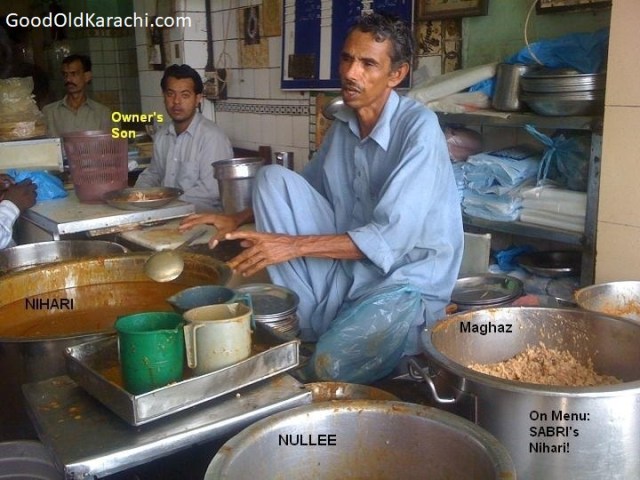
ESTABLISHED SOMETIME IN 1954….SABIR HOTEL, BUNDAR ROAD (M.A.JINNAH ROAD NOW) OPPOSITE MOULVI MUSAFIR KHANA AND DILPASAND…FAMOUS RAS MALAI OUTLET, IS OWNED BY TWO BROTHERS AND A SON. THEY HAVE NOT BUDGED FROM THEIR ORIGINAL LOCATION SPREAD ON AROUND 500 SQR YARDS AT THE MOST CONGESTED AREA OF KARACHI……At least 200 ON AVERAGE…LESS FORTUNATE ONES TAKE THEIR FREE DAILY MEAL DURING LUNCH AND DINNER TIME IN FRONT OF THEIR PREMISES. MANY…NOT TO BE KNOWN, QUIETLY, MANAGE THE SAME SPECIAL NIHARI FOR THE POOR THROUGH OBAID BHAI WHO HAS, DESPITE MY REPEATED REQUEST, NOT DIVULGED THEIR NAME TO ME……BUT I KNOW THERE ARE AROUND 50 INCLUDING A.K.D.

ON THEIR OWN, THEY TREAT FREE DINNER TO AROUND 1000 PER WEEK….SPECIALLY ON FRIDAY AND SATURDAY NIGHTS.

SabriNehariOriginal

SOME STATISTICS;

Daily Earning: Approx of Rs. 50k on average. (sometime low but very high on Saturday and Sunday mornings)

One special plate with maghaz, nullee and special bong meat good enough for 4 average eaters..costs Rs. 825/-. Naan is Rs.8/ and/or Sheermaal Rs.10/-

This is the system that cooked Nihari is put in a plate by mixing the names on kafgirs you see…well directed by the owner seen at the back; Bhai Obaid. You can alo have plain Nihari and additional Maghaz at Rs. 85 per packet.

Please do go by the looks of the conditions in this picture. Hundreds eat it every day past 1954… and the popularity of SABRI NIHARI has progress like Malaysia..not Pakistan:)

Posted in Eateries of Karachi | Leave a comment

Palace Hotel Area Old Karachi 1940s

OLD KARACHI۔۔۔۔QUITE OLD;

By Raju Jamil
JamilRajuSmall

1940s: Aerial View of Killarney hotel (later Palace Hotel), now Sheraton Hotel – Karachi.

Locations by number(s):

1. Karachi Gymkhana Cricket Ground where the unofficial Pakistan v/s MCC match took place in 1957.

2. Where we now have Pearl Continental Hotel.

3. Where we now have PIDC Building since 1955.

4. Dr. Ziauddin Road.

5. Polo Ground…opp: Jinnah Courts.

Image may contain: outdoor
Posted in Karachi Neighborhoods | Leave a comment

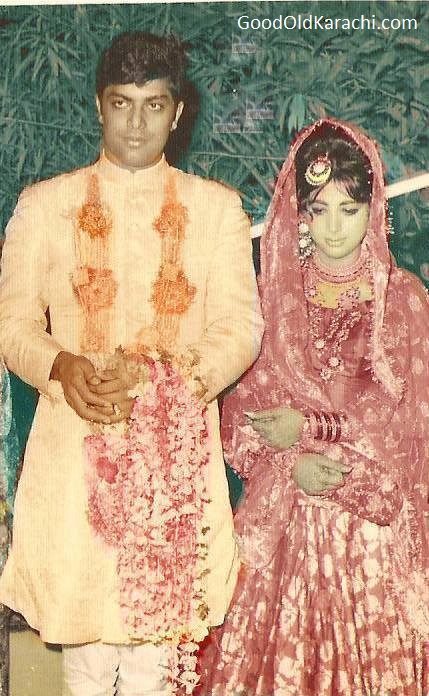
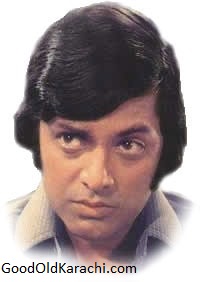
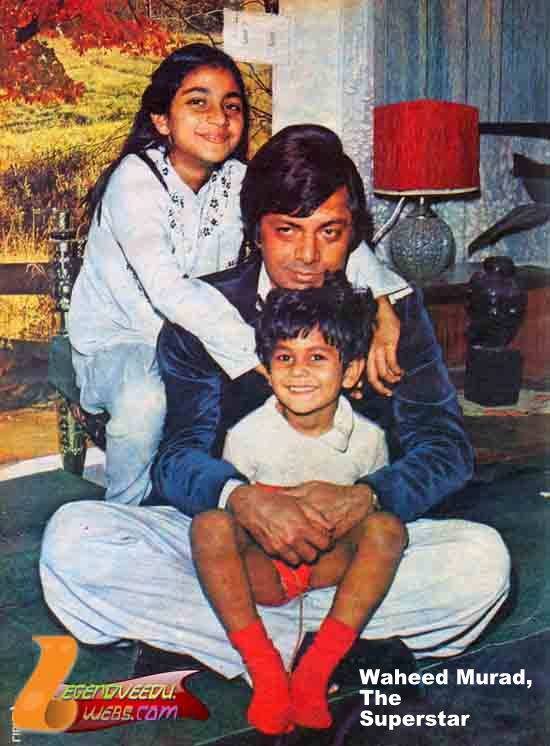
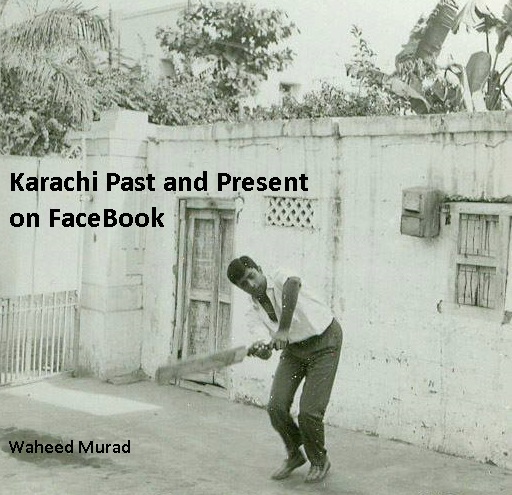
KARACHI-ite–>Waheed Murad – A Legend Hero:
By

Raju Jamil
JamilRajuSmall

MuradWaheedSalmaMakerWeddingMuradWaheedPortraitMuradWaheedFamilyMuradWaheed1950'sB

Waheed Murad was the most popular and stylish romantic hero in Pakistan. His nicknames were “chocolate hero” and “romance ka shehzada”
He was a handsome person also the most well dressed hero of its times
He was a craze among his fans. He was the first actor in Pakistan whose fan clubs were made and still 25 years after his death, his fans celebrate a week by running his 7 movies on cinemas every year, also his hair style was adopted by people
He was Pakistan’s most favourite hero among girls. In his hey-days once he went to Sadar area of Karachi in his white car, realizing it is Waheed Murad’s car, a group of 30 college girls covered the vehicle with lipstick kisses
He is compared with Hollywood actor Elvis Presley due to some similarities between them. Both enjoyed early success, the status of being the most mesmerising personalities of their own countries, great fame and then sudden fall and tragic death
He is the first rock‘n’roll dancing hero in Pakistan and he gave new style of pasteurizing songs
He is the first Pakistani hero whose official website was launched in 2002.

Film career:
He appeared in a guest role in film Saathi (1959), then he started his carrier as a film producer with Insaan Badalta Hay (1961) through his father’s production house Film Arts
As an actor he was casted in film Aulad (1962) in a supporting role, where he was the son of Habib and Nayyar Sultana which was followed by DAMAN (1963) where he paired with Neelo.
He got breakthrough from Heera aur Pathar (1964), which was the first movie by top director Pervez Malik with Zeba as his heroine.
His film Armaan (1966) was first ever platinum jubilee Urdu film in Pakistan. With the success of this film Waheed Murad became the top most star in Pakistan film industry and ruled next 10 years. The team of Waheed Murad, director Pervez Malik, Musician Sohail Rana, Singer Ahmad Rushdi and Lyricist Masroor Anwar was very popular in late 60s and they produced some successful films, later they were separated. His other platinum jubilee urdu films were Anjuman and Aawaz, while Shabana was his only diamond jubilee film.
Waheed Murad played villain role in Sheeshay ka Ghar.
His first Punjabi film Mastana Mahi was super hit, his other Punjabi film Ishq Mera Naa (1974) celebrated platinum jublilee. He worked in 9 Punjabi and 1 Pashto film.
His last released film in his life was Maang Meri Bhar Do (1983).
Hero and Zalzala were released after his death
He really wept while shooting of a touching scene in film Maa Beta
His favourite movies were Armaan, Insaniyat, Anjuman and Andaleeb. Armaan had such a tremendous impact on him, he named his house in Lahore Qasr-e-Armaan
His film Rishta Hay Pyar Ka(1967) was the first film of Pakistan which was shot abroad (In England)
Film Naag muni (1972) was the first film in Pakistan, where hero and heroine played double roles, hero was Waheed Murad and heroine was Rani
He was hero in Chand Sooraj (1970), the first Pakistani film which was based on two different stories.
He invited Shabnam to then west Pakistan and cast her in film Samundar (1968)
Top Pashto film hero Badar Munir was his driver before films, Waheed Murad introduced him in film Jehan Tum Wahan Ham (1968)
He became the first personality in Pakistani films who was hero, director, producer, script writer and singer in the same film, which was Ishara (1969)

Private life:
Waheed Murad was born into a wealthy family in Karachi on October 2, 1938. He was called as Veedu at home. His father Nisar Murad was a film distributor in Karachi. His mother’s name was Shireen Murad. He was the only child of his parents.
He passed matric from Mary Colaco School, Karachi. He did B.A. in arts from S.M. college, then he did Masters in English literature from Karachi University.
His house was at Tariq Road, Karachi.
His height was 5’ 11”.
He fell in love with Salma when he was in 9th class, finally they married on Thursday September 17, 1964. His wife was the daughter of an industrialist, who was the owner of H. M Silk Mills.
His one daughter died in infancy, He had other two children Aalia and Adil Murad, who also worked in films.
He suffered a serious accident at Ravi Road, Lahore in November 1983 but survived.
He died by heart attack in Karachi on Wednesday, November 23, 1983 at the age of 45. His father died in 1982, he died in 1983 and his mother died in 1984. He was buried in Gulberg graveyard, Lahore.
His wife Salma Murad could not see him after his death, when he died she was in USA, Salma’s sister phoned her, she couldn’t get flight but somehow reached London and then traveled to Karachi, when she reached here they had taken his body to Lahore, when she came Lahore he was buried.

Waheed Murad’s important films
1960s:
Heera aur pathar, Eid mubarak, Kaneez, Armaan, Jaag utha insaan, Dever bhabi, Ehsaan, Doraha, Maan baap, insaniyat, dil mera dharkan teri, Jehan tum wahan hum, Salgira, Andaleeb
1970s:
Afsana, Anjuman, Neend hamari khwab tumhare, Mastana mahi (Punjabi), Khalish, Naag muni, Daulat aur duniya, Baharo phool barsao, Ishq mera naa (Punjabi), Tum salamat raho, Mohabbat zindagi hai, Phool mere gulshan ka, Laila majnu, Dushman, Shama, Jab jab phool khile, Shabana, Awaz, Behan bhai
1980s:
Badnam, Dil ne phir yaad kiya, Gherao and Hero

Waheed Murad: As Producer, director, Script writer
He produced 11 films. The hero of his first 2 films was Darpan, since film Heera aur Pathar he was hero in all his produced films
He introduced director Munawar Rasheed in Insaan badalta hai, musician Sohail Rana in Jab Say Dekha Hay Tumhen, top director Pervez Malik and script writer M. Aqeel khan in Heera aur Pathar.
His last 2 films Jaal and Hero were color.
His only 2 films were flop, Jab Say Dekha Hay Tumhen and Ishara.
His produced films are Insaan Badalta Hai (1961), Jab Se Dekha Hai Tumhen (1963), Heera aur pathar (1964), Armaan (1966), Ehsaan (1967), Samundar (1968), Ishara (1969), Naseeb apna apna (1970), Mastana Mahi (1971), Jaal (1973) and Hero (1985)
He directed only a single film Ishara in 1969, which was flopped.
He wrote scripts for 4 films which were Armaan, Ehsaan, Ishara and Hero.

Waheed Murad’s directors
Waheed Murad worked with 52 directors. His first director was S.M. Yousuf and last director was Iqbal Yousuf. His pair with director Pervez Malik was very popular in 60s, he also worked in some memorable films with director Hassan Tariq. Waheed Murad also directed his one film Ishara. Here is the list of his top director.
Hassan Tariq (9 films – best film: Anjuman)
Other films: Kaneez, Dever Bhabhi, Maa Beta, Laila Majnu, Deedar, Dilruba, Naag aur Nagan, Suraiya Bhopali
Iqbal Yusuf (9 films – best film: Badnam)
Other films: Josh, Hill station, Surat aur Seerat, Khuda aur Mohabbat, Gun Man, Gherao, Hero, Zalzala
Iqbal Akhter (8 films – best film: Jab jab phool khile)
Other films: Anhoni, Mohabbat zindagi hai, Phool mere gulshan ka, Apne huye paraye, Zameer, Chhotay nawab, Dil ne phir yad kiya
Pervez Malik (7 films – best film: Arman)
Othr films: Heera aur Pathar, Ehsan, Doraha, Jehan tum wahan hum, Use dekha use chaha, Dushman
S. M. Yusuf (5 films – best film: Eid Mubarak)
Other films: Aulad, Honhaar, Zindagi ek safar hai, Goonj uthi Shehnai
Iftikhar Khan (5 films – best film: Mastana Mahi)
Other films: Sayyo ni mera Mahi, Raja ki ayegi Barat, Parvah nein
Nazar Shabab (5 films – best film: Shabana)
Other films: Shama, Nazrana, Behan Bhai, Tarana
Shabab Kiranvi (4 films – best film: Insaniyat)
Other films: Tum hi ho Mehboob mere, Saheli, Waday ki Zanjeer
M. A. Rasheed (4 films – best film: Dil mera dharkan teri)
Other films: Tum salamat raho, Rastay ka Pathar, Aadmi
He also worked with other top directors like Khalil Qaiser, Luqman, S. Suleman, K. Khurshid, Jameel Akhtar, Raza Mir, M. Sadiq, M. Akram, Nazar-ul-Islam, Haider Chaudhary, Aslam Daar, Zafar Shabab, Shamim Ara, Rangeela, Javed Fazil.
———————–

ONE OF THE FIRSTS SUPERHIT OF WAHEED
“HEERA AUR PATTHAR (1964)”

HEERA AUR PATTHAR (1964)

HEERA AUR PATTHAR under FilmArts of Waheed Murad’s Dad Nisar Murad…was perhaps the 3rd of their production..which had the newly debuted WAHEED MURAD (having done a side role as Sabiha’s son in ‘AULAD’-1961).Directed by Pervez Malik, HAP became the first ever golden jubilee (B&W) movie of Pakistan..which was wholly made i…n Karachi at Saeed A. Haroon’s Eastern Studios and about 65% on location at some guava farms of Malir and nearby Goths..a few odd miles from Karachi Airport.Starring; Waheed Murad, Zeba, Kamal irani, Ibrahim Nafis, Adeeb, Nimmo her sister Kammo, Nirala, Naz Begum, Agha Jan and some famous regular visitors of Eastern Studios like; Feroze (who wanted to make ASSALAM ALAIKUM which had the famous Salim Shahzad song; Muhabbat Ke Deeay Jala Lo) and two faces I can never forget–seen in many Waheed movies of Karachi–doing something or the other in tidbit roles as badmash aur a friend or someone. I think one’s name was ANSARI ?HAP covered just about all of Karachi’s serene and quiet areas of those days. From the songs you are to see by clicking the links below, you’ll see the famous musical fountain of Karachi which use to show off beautifully with water sprinkling and music played in front of the then REX cinema near Trinity church…jo ke subb gharatt hogaya Karachi seYou can also see the M. A. Jinnah road coming from Jinnah’s mazaar…when it was under construction. Also the National Stadium Karachi where one could just walk-in….(now it’s like you are a thief to even roam around that area ) Waheed did some shooting at his in-law’s ‘H.M.SILK MILLS’ at SITE area, Karachi..also which involved him, Nirala, Ibrahim Nafis and Adeeb. I remember ALL this by heart and its the first ever time I scribe all this…before my memory gives up the huge data it has stored on GB basis.The LYARI people had declared HAP as their NATIONAL movie on account of Waheed and his movie-Dad Kamal Irani being donkey cart drivers in that movie and the fantastic donkey cart race Pervez Malik beautifully picturized at Nazar Mohammad Goth-Konkar near Malir farms.The swinging ROCK song ‘Diwane Ho Ke..Mastane Ho Ke..Aao Manayen Picnic…’ was shot at KARACHI AIRPORT CLUB which still exsists but in horrendous condition now. It is located just adjacent to my UBL’s Airport Main branch at Old-Old Airport.. now VVIP Airport…when you go through Star-Gate.AIRPORT CLUB had one of the finest New year parties. My cousin Chicco Jehangir..I distinctly remember, danced JIVE there on LIPSTICK ON YOUR COLLAR….once. I was there as we use to regularly visit that club. It has a beautiful ambiance. A huge swimming pool (now filled with sand and rocks ) and a Squash Court. You’ll see in one of the links below….the swimming pool and all…when Adeeb is seen spending his rich dad’s money on his friends…and having fun…!I saw HEERA AUR PATTHAR…at least 12 times (once a late night show with Ibrahim Nafis and Talat Hussain also..they both were Radio Artiste) at NAZ Cinema, Karachi opp: Nishat Cinema.

Raju Jamil

—————-

First, a bit of trivia for you;
———————————-
His heroine in many movies, Shabnam, could pronounce his name only as “Auheed Moorad”…..that I am a witness…..also of the shoot of that famous song “Kuch Loag Rooth Kar Bhi, Lagtay Hein Kitney Piyare” in Gulberg near Auheed’s house where he drove his friend’s convertible.. a red Triumph right hand drive two door sports. That roadrunner street is now named after Auheed Moorad in Gulberg near Liberty Market, Lahore……

I was highly inspired by Waheed. I adopted his hairstyle and some action in acting. I met him several times on shoots in Karachi, Lahore and Murree…,including Koko Korina in Eastern Studios, Karachi…and one song shoot in Murree at Cecil Hotel.

Posted in Entertainment in Old Karachi | Leave a comment

BBC Listener’s Choice

MOST POPULAR RADIO PROGRAM OF THE KARACHITES OF LATE 60’s-70’s; “LISTENER’S CHOICE” OF BBC FROM BUSH HOUSE, LONDON…EVERY SUNDAY AFTERNOON 1.30 PM ON MEDIUM WAVE THROUGH BOOSTER IN OMAN.

By Raju Jamil

JamilRajuSmall

“LISTENER’S CHOICE” BBC WORLD SERVICE — SUNDAY AFTERNOON MUSIC BY REQUEST PROGRAM FROM BBC BUSH HOUSE LONDON IN 70’s………..

Yes, there was time that we use to enjoy the program direct from London on MW service on Radio ( broadcast via BBC booster in Oman ).

We use to send our request for the song of our choice with a message to our friend, buddy, relatives, sweetheart… occasionally which two most popular female RJ’s of BBC World Service at Bush House, London use to present. One was Margaret Howard the other Elizabeth London. They had beautiful voice. It became more beautiful when we heard our message. Alongside our choice of the popular song of that era and singers like Elvis, Neil Sedaka, Connie Francis, Cliff Richard, Lulu, Helen Shapiro, Millie Small, Engelbert Humperdinck, Tom Jones, Do ris Day, Mango Jerry, Dean Martin…the list goes on….were a craze.

Our Sunday afternoons were beautiful. We had time for Radio. Our parents had time for us. They were not continuously busy in making fast bucks at any cost—:) probably because the TV productions were limited:)

I was the most ardent and diehard audience of LISTENER’s CHOICE and most of my pocket money or money sought from Ammijan and Dadi Amaan or Abbu or earned from plays in PTV (maximum of Rs.100/- cheque for any number of scenes and days) were spent on purchasing aero grams and writing to BBC London for our request, message. My messages were mostly for my college mates and some close TV artiste’s of that era.

BBC World Service not only reciprocated wonderfully…… they ensured that we are by the side of our Radio set or Transistor (battery Radio) at the fixed time of that commercial less program of half an hour and enjoy….

How they ensured that?

See the attached front and back side scan of the post card I use to receive. Once I requested Elizabeth to send me her autographed photo and she did. I am desperately searching for it. I requested Margaret also and she obliged..as you can see from the attached two pics.

In 1979 during my first ever visit to London, I visited BBC Urdu Service at Bush House courtesy Ather sahab….and saw the Urdu service transmission. I have always been a regular listener of Urdu Service because my father’s closest friend from Delhi, Abbas Ahmed Abbasi…remained the program presenter there…for many years.
My father was also offered but he opted out because of his mother and mother in law who lived with us.

Found some memories from my archives and thought to share with my wonderful Facebook Group friends.

Amin H Karim. Wonderful memories of the program and thoroughly impressed with your fanship! That was one area where the British kept up with their colonies. (other than us all crashing in to their home! 🙂 I think Voice of America had a similar program, may be not similar; All India Radio broadcast from Ceylon as Radio Ceylon. Binaca Geetmala by Amin Sayani was a weekly program but throughout they played Bollywood songs by request. On Radio Pakistan listener’s choice program I cannot forget two names that requested songs every day (A. Aziz Memon and M. Chandio Baluch form Larkana in that order) even though it has been more than half a century since I heard their names. They still ring in my brain! I think like Raju Jamil they also spent all their hard earned pocket money in mailing postcards to Karachi and probably were proud that their names were on the air daily. May Allah bless them wherever they are! Memories! 🙂

Felix Gois Dear Raju – Thanks for sharing your beautiful memories – I eagerly await your write-ups as you bring long lost memories to an aging person who still cherish the good old days of my beloved Karachi – Pakistan. What good times there were – life was so good those times although not being well off we still loved those times. God Bless you Rahu Sahib and my class-mate Amin Sahib for all the good works. Another great read is from Mr.Zafarullah Syed who works tirelessly in keeping us with those wonder years. GOD BLESS YOU ALL AND YOUR FAMILY.


Posted in Entertainment in Old Karachi | 1 Comment

Bonjour 1993

BonjourPCMag1993

(Click on the link to open the magazine in .pdf format)

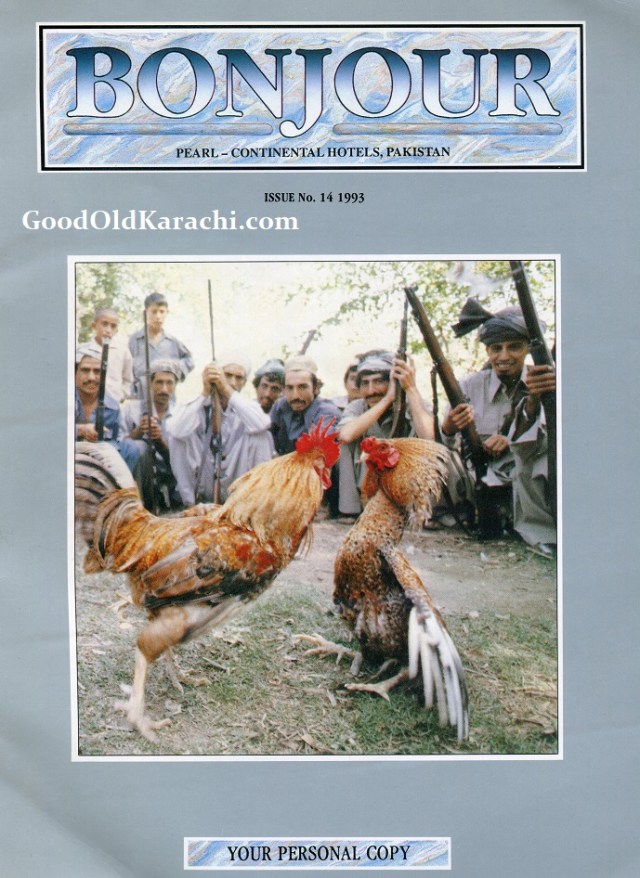
BONJOUR: This is a magazine published by the Pearl Continental Hotels Pakistan in 1993. It has some interesting articles on Karachi including one on Karachi Art Galleries and one on Abshaar, the Karachi Dhobi Ghat with nice photos and old ads.  AHK. Aug 18 2018;  Of note is the fact that MENIN RODRIGUES  founded BONJOUR in 1989 as the Corporate Manager for the Group; the GM at Karachi PC was Wasim Mirza, and the magazine was inaugurated by Hameed Haroon of the DAWN Group in the presence of Sadruddin Hashwani, Chairman of Hashoo Group. Incidentally, he also founded “SEJOUR” the in-house magazine of Karachi Sheraton Hotel in 1985, and “The AVARI” in-house magazine in 1991.

BonjourPCMag1993

Posted in Karachi Related Publications | Leave a comment

The Lost Tribe of Karachi

JEWS: THE LOST TRIBE OF KARACHI
By

Dr. Sohail Ansari

AnsariSohail2016

JewishCommunityofKarachi

Pakistan was not inherently anti-Semitic. In fact, Pakistan hosted small Jewish communities from the 19th century until the end of the 1960s and the largest of that community lived in Karachi. They were of various origins. Most of their ancestors had migrated to Karachi from Persia and the native language for this group, known as Bene Israel, was Judeo-Marathi. In the 19th century, Bene Israel migrated from the western part of Maharashtra to nearby cities, chiefly Bombay, but also Poona, Ahmadabad and Karachi. About a century ago, the Iranian Jews exported carpets to central Asia. The Soviet Union closed its borders to them in the 1920’s and that is when a number of them moved their base of operation to Karachi. Working as commission agents, they brought carpets from Iran for further transportation to merchants in London. Jewish families in Karachi lived mainly in the areas of Ranchore Line, Ramswamy and Soldier Bazar. There used to be a kosher slaughterhouse as well. They spoke Urdu language in dealing with local people. Relations between the Jewish community and others in Karachi were harmonious till 1948. The history of Jews living in Karachi is neither preserved nor remembered in Karachi today.

In 1881, there were 153 Jews residing in Sindh. According to Aitken’s Gazetteer of the Province of Sindh, there were 428 Jews in the census of 1901and those nearly all were in Karachi. Many of them belonged to Bene Israel who observed Sephardic Jewish rites and were believed to have settled in India shortly after the destruction of Jerusalem by Titus. Their number rose to 650 in 1919.

During the British era, they were a small but vibrant community of Karachi. Young Man’s Jewish Association was founded in 1903 and Karachi Jewish Syndicate was established in 1918. The All India Israelite League, which represented 650 Bene Israel living in the province of Sindh was first convened – founded by two prominent Bene Israel, Jacob Bapuji Israel and David S Erulkar. Karachi became a fulcrum for the Bene Israel in India, the place where they congregated for High Holiday prayers. In addition, the Karachi Bene Israel Relief Fund was established to support poor Jews in Karachi.

Records of Jewish presence are found in various historic documents of Colonial rule. For example, J.W. Smyth records in “Gazetteer of the province of Sindh, Karachi district,” about education schools in Karachi:
”The number on the rolls in the English branch in March 1916 was 350, nearly all being Mahomedans, though some Hindus and a few Jews are admitted… St Patrick’s school was started in 1861 by the Reverend J. Wily, Roman Catholic chaplain, as a mixed school for boys and girls, and was conducted in his own quarters… A few Hindus, Mussalmans, Parsis and Jews attend…
The origin of the Church Mission High School was a private school started by Major Preedy, collector of Karachi, long before government moved in the matter of education. The number on the roll in March 1916 was 417, of whom 256 were Hindus, 77 Brahmins, 32 Jains, 35 Mussalmans, nine native Christians, two Parsis and six Jews… The number of students in the arts branch [of the Dayaram Jethmal Sind College] in 1915-16 was 268, of whom 181 were Hindus, nine Brahmins, 38 Mahomedans, 19 Parsis, 18 Europeans and Eurasians and two Jews.”

In the late 19th century, one of Karachi’s notables was Soloman David, who died in March 1902. He was a surveyor of the Karachi municipality and built the Magain Shalom synagogue in Karachi. His gravestone reads: “The widely known and highly respected Soloman David always sought the welfare of the Jewish community and through his liberality erected at his own expense a handsome synagogue, Magain Shalome”.

Prominent among the Jews during the Raj were Simon Wyse who ran the Great Western Hotel and Marder who owned Killarney Hotel Marder’s Palace. Thus, two of the best hotels of the city were owned and managed by the Jews. Moses Somake was the architect who gave the city some of the beautiful buildings such as Mules Mansion in Keamari, BVS Parsi High School, the Karachi Goan Association Hall in Saddar the Flagstaff House, Jaffer Faddoo Dispensary and Edward House. Abraham Reuben, a municipality surveyor who was elected to the post of councillor of the Karachi City Corporation in 1919 and twice thereafter. Abraham Robin was another well known person.

There were schools established by Jews. One of those was established in 1927 by Abraham Reuben in Haji Mureed Goth. Someone told me it still is running in his name ‘Abraham Reuben School’. If you look in the middle of the Mereweather Tower, Star of David can be seen engraved on it, set in stone.

The number of Jews increased between 1837 and 1941 with immigration (22%) as well in addition to natural increase. According to a 1941 consensus there were 22480 Jews in India. Of those 1235 were in the areas of current Pakistan. Jews in Karachi amounted to 0.3% of the population. Bene Israel were about 75% (the other main groups among Jews were Cochin and Baghdadi) and most spoke Marathi.

Also, during World War II there were some Polish Jews who came and stayed in Karachi. There was a transit group of children as well. Albeit a very small number.

A vibrant community, initially most of them were recruited as soldiers to the army of East India Company, but later moved to government civilian jobs and businesses. Even the womenfolk contibuted – in 1947 there were 538 Bene Israel women in Karachi of whom 30% were gainfully employed. Their literacy rate ran to 70.43%.

Just before the independence (in 1947), an estimated 2000 – 2500 Jews resided in Karachi; 200 of them decided to migrate to India on the division of the subcontinent and most of the remaining went that way in 1948. There were subsequent immigrations to Europe and Israel. By 1953 only about 500 Jews left in Pakistan. Most Bene Israel chose to go to India whereas the Baghdadi Jews preferred to go to Israel. Another account describes the number of 400 Jewish people living in Karachi in 1959. By 1968, their number in Pakistan had decreased to 250, almost all of whom were concentrated in Karachi, where there was one synagogue, a welfare organization, and a recreational organization. There were only 10 – 13 families left by 1972. The Jewish wife of an Australian Diplomat to Pakistan is said to have helped the members of the tiny Jewish community in the 1970s to migrate to Israel. She used to look after their needs for Kosher supplies including wine. She also took the records of the Synagogue with her and later gave those to a library in Jerusalem.

There were two famous Jewish cabaret artistes who performed at the Roma Shabana Nightclub in the 1970’s. They were Deborah and Suzie known as Daniel sisters.

In 2005, the front page of the Jerusalem Post featured a boxed item headlined ‘Surprise! There are still Jews in Pakistan.’ This story was triggered by an email sent to the newspaper’s online edition in a Reader’s Response section by one Ishaac Moosa Akhir who introduced himself thus: “I am a doctor at a local hospital in Karachi, Pakistan. My family background is Sephardic Jewish and I know approximately 10 Jewish families who have lived in Karachi for 200 years or so. Just last week was the Bar Mitzvah of my son Dawod Akhir.”


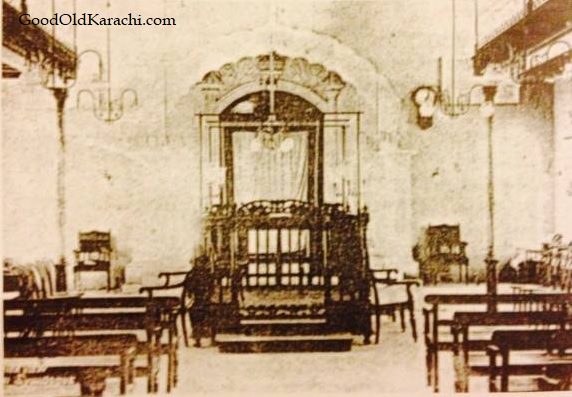
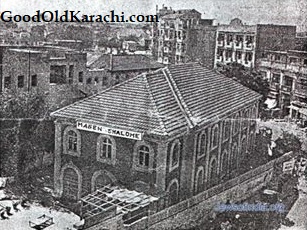
MAGAIN SHALOME SYNAGOGUE

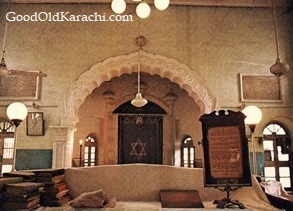
The construction of the Synagogue was an evidence of Karachi’s diversity and tolerance in those days, whereas, its destruction epitomized parochialism and intolerance prevalent now. Magain Shalome Synagogue was built in Ranchore Lines on Lawrence Road (now Nishter Road – at corner of Jamila Street) in 1893, by Solomon David Umerdekar and his wife Sheeoolabai. Further extension was undertaken nearly twenty years later by his sons Gershon Solomon Umerdekar and Rahamim Solomon Umerdekar. It was officially opened in 1912. The synagogue soon became the epicentre of activity for the small Jewish community. At a later stage a community hall named “Shegulbai Hall” was built by Abraham Reuben in memory of Shegulabai Solomon Umerdekar. In 1916-18 the Karachi Jewish community opened a Hebrew school on the synagogue premises and in 1918 constructed the Nathan Abraham Hall. At one time, the street was called ‘Synagogue Street’.

There is a road in Ramswamy neighborhood of Karachi, named after the founder of Magain Shalome, Solomon David Road (also called Suleman Dawood Road).

Solomon David was a surveyor for the Karachi Municipality. He died, at the age of 56 years, on 27th April 1903 and was buried in the Mewashah graveyard. The gravestone of Solomon David is said to read, “Very well-known and highly regarded Solomon David always wanted a liberal Jewish community, through his own expense built a fine synagogue, Magain Shalome.

The name Magain Shalome was given by an Indian Jewish Scholar, Samuel Ezekiel Talker who moved to Karachi and was instrumental in enlarging and rebuilding the synagogue. He served as ḥazzan and trained several assistants in order that “the eternal light should be kept burning continuously and eternally.” Talker was buried in Karachi.

The synagogue was often called by locals as ‘Bani Israel Masjid’. It was set on fire in 1948 (but survived) when several Jews were also attacked. It became dormant in the 1960’s. In July 1988 it was demolished by property developers, by orders of Zia ul Haq to make way for a commercial building to house a shopping mall – Madiha Square. An American Jew took the Torah scroll case to the United States. Whereas the synagogue registers covering the period 1961-1976 were donated to the Ben-Zvi Institute Library in Jerusalem. These ledgers documented several events, for example a circumcision recorded in 1963 and several weddings in 1963-4. However, in 1973 only 15 names were recorded on the ledger, of whom nine were listed to have “left Karachi”.

The Jewish community of Pakistan donated two silver Kiddush glasses from Magain Shalome Synagogue to the Museum of the International Synagogue at John F. Kennedy Airport.

The last custodian of the synagogue was Rachel Joseph who was an elderly frail retired school teacher (taught at Jufelhurst High School). She claimed that the property developers had promised her and her brother Ifraheem Joseph an apartment in the new building, and also space for a small synagogue. Unfortunately, both Ifraheem and Rachel Joseph passed away before they received any compensation. She felt that she was swindled and tried her best (unsuccessfully) to move a court to get what she was promised. However, she managed to muster some support to build public opinion and in 2003, Kunwar Khalid Yunus wrote a moving letter to daily Dawn pleading that she should be helped. Rachel Joseph, died on 17 July 2006 at the age of 90 years and buried in Karachi; her brother died about a decade before her.

Unfortunately, despite all the efforts the Magain Shalome Synagogue was ultimately burnt and brought down on 17th July 1988 to create a shopping plaza – Madiha Square. Property developers who built the plaza, promised space for another synagogue but that was never fulfilled.

JewishFestivalInKarachiJewsKarachiBJewsKarachiCJewsKarachiDJewsKarachiEJewsKarachiF

JewishGraveyardB


Posted in Contributions by Jewish Community | 1 Comment

Karachi Related Websites and Fora

The Karachiwala Website: 
https://thekarachiwalla.com/

Home is the place where, when you have to go there, they have to take you in*. Karachi fits the bill for many.

Vibrant and Colourful. Karachi is the darling of poor and rich alike. Unpredictable and Violent. Karachi is the nightmare for poor and rich alike.

Home to the most diverse of populations. Muslims, Parsis, Jews, Christians, British, Shia, Sunni, Balochi, Sindhi, Pakhtun, Kashmiri and others. Many of them like Karachi. Many of them hate Karachi. Karachi, like a gracious mother, has embraced them all. It has given them freedom to be themselves. Some dream during the day. Some work during the night. Some quote Shah-jo-Risalo. Some sing Bulley Shah. Some read Jane Austen. Some recite Faiz Ahmed. Some find comfort in extreme interpretations. Some walk barefoot in its shrines. Some destroy sanctity of its shrines. Some try to make it proud. Some try to slaughter this goose to steal all its golden eggs. All at once.

The diversity makes Karachi beautiful. The diversity makes Karachi painful.

Long live Karachi.

The Karachi Walla in news:

Karachi uncovered: website reveals city’s hidden architectural gems

Farooq Soomro, the Karachi Walla


FACEBOOK GROUPS


I Sure Want My Old Karachi Back 

https://www.facebook.com/groups/IsurewantmyoldKarachiback/

DESCRIPTION

This group was founded by Mr. Danny Dhalla and is currently administered by
him and Dr. Sohail Ansari.

Folks please feel free to take a walk down memory lane & enrich our memories with the vista of Karachi as you remember it which may have faded from our memories, pictures, videos, snippets, facts & figures are welcome. Keep the spirit of our Karachi burning forever the way it used to be.
As of August 2018 this group had 11,000 plus members.


Old Karachi Group 
https://www.facebook.com/groups/194310214411607/

Posted in Karachi in Cyber Space | Leave a comment

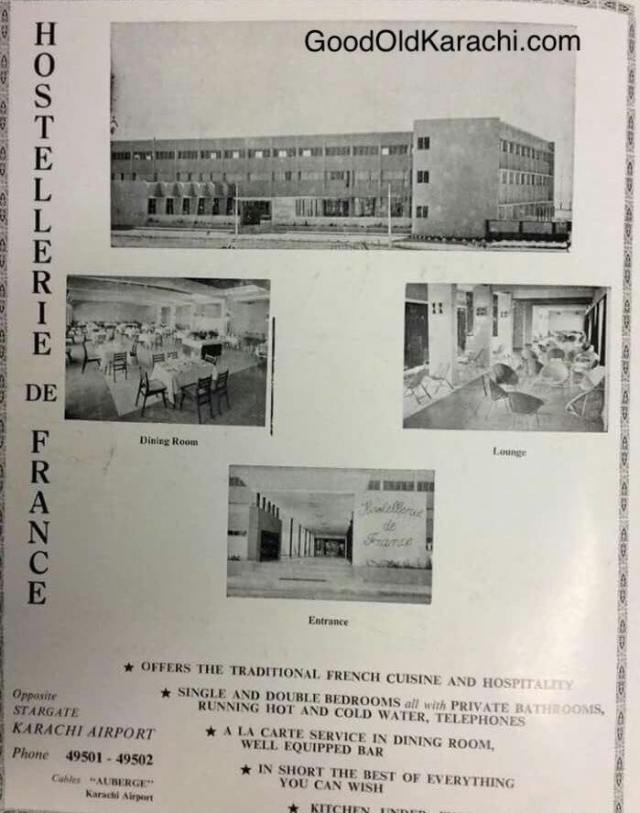
Hostellerie De France, Karachi


AdHostellerieDeFrance

The photo is courtesy of Mr. Nadeem S. Haroon.

Raju Jamil on Fcebook August 9 2018: Family dispute led to the closure of this amazing hotel. Its open air Disco in a large WELL was unique. I could have have danced there all my life. Wonder years were those. Only a month back I visited the hotel skeleton and went towards the WELL Disco site but got warned of it being inhabited by snakes and scorpions well covered with scary bushes. The hotel structure stands like a mummy slyly smiling at us when we see it right in front of old airport’s stargate.
Ehsan Shahid Anam wrote on Facebook August 10 2018:  I do…and if memory doesn’t fail me it was on the left hand side of the road while heading towards the Terminal building and a little short of Midway House which was further up on the right.
Akber Zaidi …… Rounaq Reza and Arif Reza were the owners …… one of them , don’t remember which one, was a PIA Cairo crash survivor …..

Posted in Entertainment in Old Karachi | 6 Comments