Pakistan Hockey – An Obituary


By Menin Rodrigues

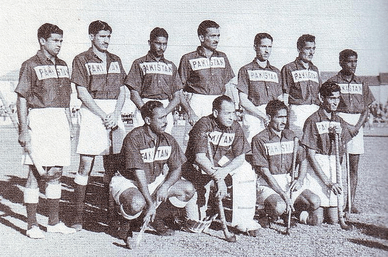
HockeyTeamFirst1948
First Pakistan Team 1948

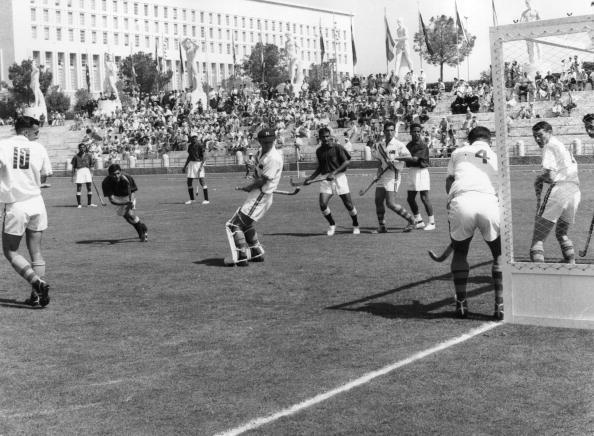
HockeyPakAustraliaRomeOlympics1960

Pakistan v/s Australia 1960 Rome Olympics
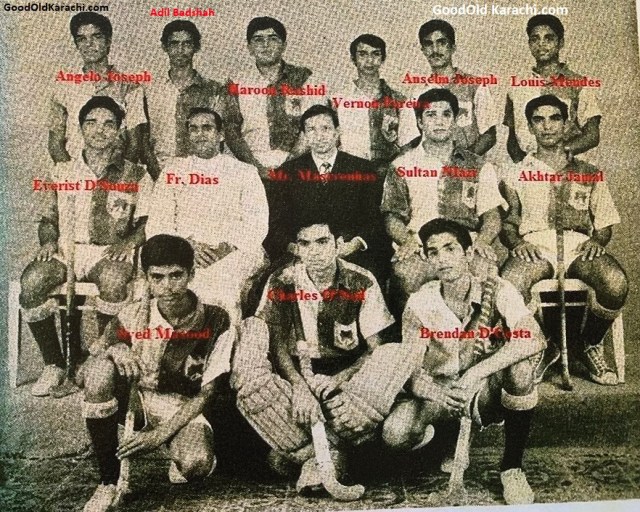
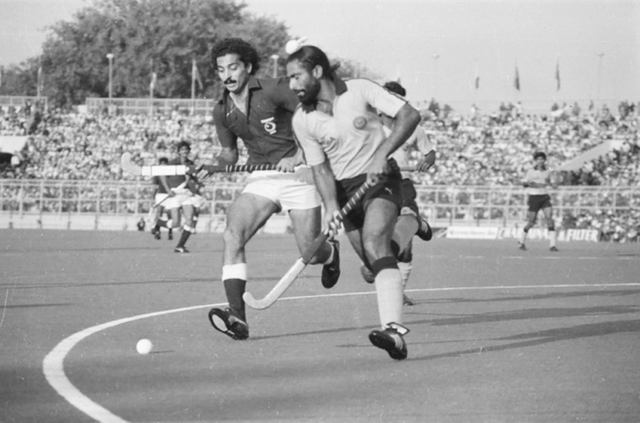
HockeyTeam1968StPatsHockeyClub1981

KARACHI: 25 June 2015 – It is heart-breaking for me to write the last rites of
Hockey in Pakistan. It died on a warm and sunny day in Antwerp, Belgium on July 3,
2015 as the Irish guile smiled and prevailed upon our team, and shocked us into
oblivion. We failed to qualify for the 2016 Olympics for the first time since
the 1948 Games.

The post-mortem is now being undertaken by our noisy TV channels as breaking news,
while ex-stalwarts are crying foul and pointing fingers at each other. In my opinion, not
even one of our past heroes who are in the forefront, are allegedly qualified and worthy
of any position in the PHF, be it administrator, selector, manager or coach. It is okay to
reward them with ceremonial positions such as mentors and organize ‘benefit matches’
to respect their contributions to Pakistan Hockey, period.

The trademark hockey these greats played is now history so there is no point in
appointing people like Akhtar Rasool, Shahnaz Sheikh, Islahuddin, Samiullah, Hanif
Khan, Qasim Zia etc as selectors, coaches or managers. They cannot give any tactical
input to the players. We now have a new brand of hockey altogether! Simply put, the
switchover is like the conversion of an android phone to a smart phone – you know how
to use it but don’t know how it works!!

Hockey in Pakistan and the game’s influence and stature in St. Patrick’s High School
(ironically, dedicated to the patron saint of Ireland) have a deep connect. Long before
Pakistan came into being, hockey was the mainstay of our (Christian
community) eminence in this part of India. Our hockey greats were household
names in all-India after the school team had beaten the Bhopal Wanderers in 1941
(comprising of many players from the gold-medal winning India team of the 1936 Berlin
Olympics) in that epic match played on the school ground in Karachi.
The all-time hockey greats of our community included, Peter Paul Fernandes (1936
Olympian), Lawrie Fernandes, Pat Mendes, Julius Tellis, Marceline D’Costa, Nazareth
Castellino, Jack Gonsalves, Milton D’Mello (1948 Olympian), Jack Britto (1952
Olympian), Melito Dias, Bernard Fernandes, and later Carmen D’Souza, Leslie Vaz,
Assisi D’Souza, Lenny Fernandes, Everest D’Souza, Terrence Andrade, Victor D’Lima
and several others.

When Pakistan was invited by the FIH (International Hockey Federation) to participate
in its first post-war Olympic Games in London 1948, the administrative structure of
hockey here was in shambles. It is believed that Jinnah requested O.B. Nazareth of St.
Pat’s to pen the Constitution of the Pakistan Hockey Federation, and assist in the
selection of the Pakistan team. OB thus became Pakistan’s first Co-Manager of the team
that participated in the 1948 Games and which also included the dashing St. Pat’s school
boy Milton D’Mello. The captain of the team was A.I.S. Dara and we finished fourth.
The school continued to produce brilliant hockey players and in the following Olympic
Games of 1952 in Helsinki, Finland, it was the great Jack Britto who donned the colors
for Pakistan. Hockey grew in prominence with players mostly from the Punjab and
Sindh making it to the national team. Both Pakistan and India were at their peak in the
1950s, 1960s, 1970s and 1980s with the Asian style of hockey (dodging, dribbling, small
passes, flicks and lightening left & right wing combinations) dominating the
competitions.

Pakistan won her first gold medal in the 1960 Rome Olympics through a solitary goal by
Nasir Bunda which created history; we had beaten India for the first time in its 32 years
of supremacy in world hockey! Then again in 1968 at the Mexico Olympics we won gold
under the captaincy of Tariq Aziz, and finally in 1984 at the Los Angeles Games, we won
our third and last gold medal with Manzoor Jr. at the helm.
For a team that won three Olympic titles (Rome 1960, Mexico City 1968 and Los
Angeles 1984), four World Cup titles (Barcelona 1971, Buenos Aires 1978, Mumbai
1982 and Sydney 1994); three Champions Trophy titles, founded in 1978 by Air
Marshal Nur Khan and the PHF, (Lahore 1978, Karachi 1980 and Lahore 1994)
and eight Asian Games titles (Tokyo 1958, Jakarta 1962, Bangkok 1970, Tehran
1974, Bangkok 1978, New Delhi 1982, Beijing 1990 and Guangzhou 2010), and to be
relegated to the 10th position today, I am quite sure something must be terribly wrong
with Hockey in Pakistan!!

We continued to dominate hockey until the early 1990s when gradually the European
and Oceania administrators of the game cleverly changed almost every feature of the
game. Firstly in the mid 1970s they changed the surface, from real grass to synthetic
surface, known as Astro Turf, which for one, required players to be physically strong
with endurance as the basis of their play. Polygrass is now the official artificial playing
surface.

While Pakistan and India continued to play the 5-3-2 formation (center-forward,
left-in, right-in, left-out, right-out; center-half, left-half, right-half, left-
back, right-back) with their well-known skills and artistry, the Europeans introducedsoccer-style ‘keep-the-ball’ tactics without having to maintain their positions. They mesmerized the Asian players who didn’t know what was happening on the field! They tried desperately but the European teams beat us due to the superior fitness levels of their players. Hockey was now beginning to fly over the heads of our administrators,
managers, coaches and players. It had become a speedy mind-game and less of artistic
skill-play. Pakistan and India were tricked into becoming mediocre teams.

By the middle of 1990s, both Pakistan and India continued to slide down the ranking
and fell from their lofty 1st and 2nd positions to a pathetic 10th and 9th positions in
world hockey today. Reality had dawned upon us in the 1990s but we chose to confine
ourselves to traditional tactics which by now had become redundant – the Europeans
even changed the color of the artificial turf from green to blue!!
The reason for Pakistan’s hockey downfall is crystal clear – we continued to
politicize the Pakistan Hockey Federation (PHF) with inept, pot-belly former players
(mostly allegedly without any formal education) into administrative and managerial
roles. We patronized family, friends and cronies into the teams, and failed to induct
professional hockey management modules to match world standards.
The result is right before us; hockey is dead in Pakistan and also in St. Pat’s. RIP

{Menin Rodrigues was a former sports writer for Morning News from 1978-1982, during which he covered two inaugural Champions Trophy World Hockey Championships (won by Pakistan) and the Hockey World Cup 1982 in Bombay (won by Pakistan).}

Posted in Karachi Sports | Leave a comment

Karachi Women in Aviation

By
Dr. Sohail Ansari
AnsariSohail2018
Aviation has a big part in the history of Karachi. We know about a few foreign women explorers making historical journeys to or from Karachi creating a number of records. Whilst that was happening, Karachi Aero Club encouraged local women too. This is a report from December 1929:

HINDU WOMEN TAKE TO THE AIR

The biggest flying meeting yet held in India took place, last evening, under the auspices of the Karachi Aero Club, in co-operation with the Air Force and Imperial Airways.
Throughout the afternoon, without intermission, aeroplanes were in the air, carrying passengers; hundreds of whom flew in the club’s Moth planes, as well as in the Imperial Airways airliner City of Delhi.
Cups and prizes were given away by clubs.
The presence of Hindu women pilots testified to the growth of air mindedness on live part of Indians.
(I guess the reporting journalist meant ‘Indian’ rather than ‘Hindu’)

Amidst all this the first Indian woman to fly an aircraft and earn an aviation pilot license in 1936 was Sarla Thakral. She used to fly between Karachi and Lahore and was the first Indian woman to fly solo. Following partition, she moved to Delhi.

Whereas, Pakistan’s first female commercial pilot was Shukriya Khanum. She joined PIA in 1959 but had to accept the job of flight instructor at its training centre. That was because the airline did not allow female pilots to fly commercial planes. She very often took flying enthusiasts on joy rides at Karachi Flying Club.

On this page, I had, in the past, shared stories of various overseas female aviators. So I will limit this one to the two ladies mentioned above.

Image may contain: 1 person
Image may contain: 3 people, people standing and shoes
Posted in Karachi History | Leave a comment

The Parsi Community of Karachi

By 
Azra Malik

The Parsi community in Karachi in spite of being a small minority, has made a remarkable impact on the Metropolis. Eduljee Dinshaw , a renowned philanthropist established the Lady Dufferin hospital, a hospital exclusively for women and children in 1894 in Karachi. Eduljee Dinshaw did a great deal of charitable work and also set up a number of dispensaries in Saddar and Lyari for the poor. This community has established a number of hospitals in Karachi.
Anklesaria hospital, Gool Banoo and Dr Burjor Anklesaria Nursing Home Karachi, started its operation in 1962. Dr S.D Anklesaria Eye Hospital, and Spencer Eye Hospital established in 1938 by Dr KN Spencer.
The NED University, named after its benefactor Nadirshaw Eduljee a Dinshaw was established in 1922 in Karachi. Mama Parsi Girls School was established on 1st April 1818, by a Parsi philanthropist and also the first mayor of Karachi Jámshed Nusserwanjee Metha !
Bai Virbaiji Soparivala BVS Parsi boys school and Dow Medical College were also founded by Parsis.
The Parsi community also established hotels in Karachi. Hotel Metropole , used to be an important landmark in the city was inaugurated by Shah of Iran in 1951.
Avari Hotels was founded in 1944 by Dinshaw Avary. Their first location was the Beach Luxury Hotel in Karachi in 1948. Later the company established the 17-storey Avari Tower Hotel, with 120 suites in Karaćhi.
The undoubtably amazing, hardworking and benevolent Parsi community is also known for their “Endless love affair with their cars” reference (Consumer Pulse- Parsis and their endless love affair with their cars).
Scan any auto classified of any reputable newspaper of Karachi, one is bound to come across ‘Parsi owned’ car ads. Parsi-owned cars are sold at a 20% premium as compared to other used cars.
While reading this ad in the newspaper, I always got curious to find out the reason? And of course the reason is that the Parsis are very particular about the maintenance and the upkeep of their cars, due to which their cars always remain in good shape and fetch a good price in the market .
So, next time you are considering a second- hand car you know where to go.

Image may contain: sky, tree, house and outdoor
Image may contain: plant and outdoor
Image may contain: tree, sky, plant and outdoor
Image may contain: sky and outdoor
Image may contain: car and outdoor
Posted in Contributions by Parsis | Leave a comment

Edward Raymond, Judicial Commissioner

By Dr. Sohail Ansari 
AnsariSohail2018


Judge Edward Raymond, of Karachi, who died in June 1928 at the age of 64, was the first Indian Catholic to be named Judge of the High Court Bench. Besides devoting great energy to the State, Mr. Raymond likewise distinguished himself in service to the Church. He was President of the All India Catholic Conference in 1922, and was made a Knight of St. Gregory by his Holiness Pope Pius XI in 1924. For years he had received Holy Communion daily.

He had eleven children. Among his sons were Fr. Stephen Raymond who was ordained a priest of the Roman Catholic Archdiocese of Karachi, Archbishop Leonard Raymond of Nagpur and Judge Herman Raymond of the Sindh High Court.

Image may contain: 1 person
Posted in Contributions by Christians | Leave a comment

2nd Battalion Black Watch 1948

By 
Dr. Sohail Ansari
AnsariSohail2018

On 26th February 1948,  The 2nd Batallion Black Watch  paraded through Karachi, embarked the troopship Empire Halladle and left for good. They were based at Malir. Their commanding officer then was Lt-col Neville Blair.

The Battalion was led by its pipers in full ceremonial dress. A convoy of trucks took them from Malir to the assembly point in St Catherine’s School. From there they marched through Empress Market and Elphinstone Street up to the Governor House. They paraded for a Royal Salute to Mr Jinnah before proceeding to the docks to board Empire Halladle. They were the last British Army colours to leave Pakistan.

Image may contain: 1 person, bicycle and outdoor
Posted in Karachi History | Leave a comment

Video Archive of Karachi 1930s

Found by Mr. Raza Kazmi

Intertitle: Karachi Congress
Bridge. Lots of people in train platform. Train arriving.
Gandhi at Karachi Congress 1931( to be Pakistan in 1948) gathering of delegates, they arrive at Karachi railway station,
Various attendees at this conference, Gupta, Bose, woman unidentified, possibly Indira Gandhi included.
Lots of people in procession with flags in street,. Mahatma Gandhi gets off train and is greeted at conference area.
Shots of conference taking place outdoors / lots of people.

https://www.huntleyarchives.com/preview.asp?image=1019544&itemw=4&itemf=0004&itemstep=1&itemx=16&fbclid=IwAR12UhIEMh3v9re0MvZUt4g-KIoy6OOx5qcrHSCSgTOr5dHVO8Bc4Nx4vmM

Posted in Karachi History | Leave a comment

Goa-Portugese Association Hall, Karachi

By 
Menin Rodriques
RodriguesMenin2018Small

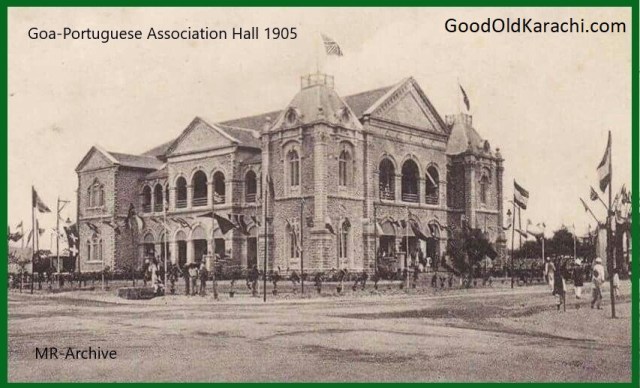
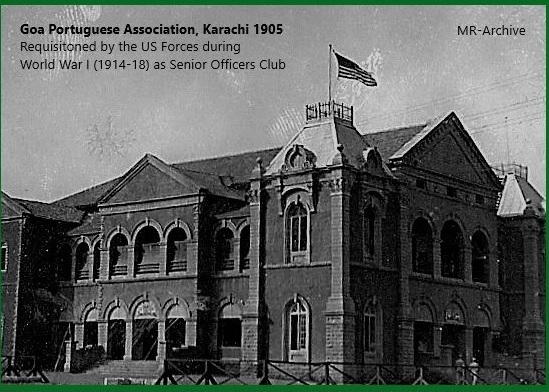
The Karachi Goan Association was requisitioned to the United States Armed Forces stationed in Karachi during WW2 (1939-1945) and used as a Senior Officers Club (See US Flag hoisted). The Club also played host to the Late Duke of Windsor then Prince of Wales and the First Governor of the Province of Sind. KGA also hosted the Marylebone Cricket Club (MCC) in 1933.

GoanAssociationHall1905Tag

Goa-PortugeseAssociationB

Posted in Contributions by Christians | Leave a comment

Manghopir’s Hot Springs

By: 
Dr. Sohail Ansari
AnsariSohail2018

Over centuries Manghopir’s hot springs has continued to attract thousands of people from far-flung areas who gather there for a bath. These hot sulphur springs, legend has it, have miraculous healing powers that can cure most diseases of the skin. It had brought a large number of lepers from very distant areas as well.

J.R. Martin, collector of Karachi, took a keen interest in the development and improvement of these baths in Manghopir.

Currently, Mama bath is the only functional one amongst Manghopir’s six hot springs.

Manghopir is a very good example of inter-faith and multi-communal harmony.


No photo description available.
Image may contain: one or more people, people walking, tree, sky, outdoor and nature
Image may contain: one or more people, people sitting, outdoor and water
Image may contain: outdoor
Posted in Contributions by British, Karachi History | Leave a comment

Paan Karachi Wala….!

By: 
Ms. Anjum Khan
KhanAnjumSmall

For some reason I don’t remember my self ever having a desire to even taste a “Saada paan”.. it’s strong smell always warded me away yet it was /is still quite popular among many ..don’t take me wrong once in a while I don’t mind having one “Meetha pan” woh bhi fully drenched in loads of “ Gulqand ”and sprinkled with tons of “khopra” sprinklers , so much that many a times the taste of pan is only felt when all the good stuff is gone and only the hard core “chalia”bits and slightly bitter minuscules bits of chewed pan is left in the mouth.☺️
As a lil girl I remember my daadi ama used to cherish her “paandaan”as her prized Possession much to the dismay of my dada Abu .. she even learnt the art of making a “paan ki glori “from her best friend and neighbour “ Hajan Bai”
from where she drived this shoq.
Pan has been around since long in our Indo pak ,we all know that , our neighboring country still has more pan key shoqeen people then in our country, infact over the period of time the number of “pan key khokhey “ r kinda diminishing in its number. Maybe because like prices on all items taking a hike this shoq is also kinda getting expensive to afford now Yet still in “Shaadi Biya” parties it has taken a new turn as it is now used as a “ after dinner treat ”it’s wrapping and presentation has also taken a new shape depending upon the place you buy from .. some pans are sold for a “thousand rupees” and some evern at a higher price .,”Woh kehtey haina shoq ka koi mol nahi hota “lol.
In many special Paan stores it is sold in a variety of flavors, Ofcourse “Meetha”
and “Saada Saunf chalia”being the top favorite ,
Other added attractions are
Chocolate paan, silver paan , golden paan,and Banarsi paan ,Some paans are served with a cherry on the top,
I mean like like literary a cherry is attached to it.
Listen people Paan when eaten once in while is not half as bad except that it instantly decolorizes your pearly whites, but making it a habit, Just forget it ,
it spells bad results, like really bad.
Warning :-
The health pundits warn us to refrain from prolong indulging in chewing
paan because of the ingredients put inside ,like the “katha and choona” which can be very toxic for our mouth in general, and that “Beetle Nut” is bad for our teeth and can cause “wear and tear” issues in our gums but More horrible consequences await for those who also use “Tobacco” in it, which can cause severe mouth/throat cancer and many other life threatening and hazroudous throat infections as well.🙁
Keep these warnings in your head, next time songs like” Paan khayo Sanyan hamaro sanwali suratya hont laal laal”and “ Khai kay paan banaras wala khul jai bund akal ka taala” instigate you to have pan.

No photo description available.
Image may contain: food
No photo description available.
Image may contain: one or more people
Image may contain: food
Posted in Eateries of Karachi | Leave a comment

Freedom Fighter from Mangho Pir

By
Dr. Sohail Ansari
AnsariSohail2018

This is another story of valiance, from Mangho Pir, which is not known to many and never told to juniors.

After invasion of Karachi, the British troops were based in a cantonment at Ram Bagh. They used to have a picnic every Sunday on a stream at Mangho Pir. The locals were not allowed on the stream on Sundays and the Shrine was closed for that reason.

Chakkar Bin Nothak rose against the invading forces, organised a group to challenge it and fiercely confronted the troops visiting the stream in March 1839. In that guerrilla encounter, Captain Hand and other soldiers were killed.

Chakkar was alleged to have killed the Captain to rob him off the gold buttons on his jacket. He was ultimately caught, tried in a military court and sentenced to death. That was the first capital punishment handed over in Karachi by the Army in a new Government.

When asked of his last wish, Chakkar desired to see his beautiful land (Karachi) till his last breath. He was hanged to death in December 1839 without being blind folded on a hill near Dalimyah to fulfil his last wish.

In order to prevent his grave attracting other defiant locals, it is claimed that his dead body was brought to Lasbella where he was buried anonymously. Gul Hassan Kalmatti has recently shared the photograph of a grave believing it to be Chakkar’s.


Image may contain: outdoor
Posted in Karachi History | Leave a comment