Origin of Name Karachi: One view

From where Name of Karachi originated?

By Nadeem Baqai 

Map of Asia in 100 BC, Karachi was then Kaccha.

The History of Karachi – earliest account of the area where Karachi is located can be found in the record books of one of Alexander-the-Great’s admirals, who sailed back home from the Greek expedition to India, from a harbor by the Indus delta, known as Krokola.
According to widely held belief though, the city of Karachi started its life as a small fishing settlement by the Indus Delta known as Kolachi-jo-Kun (the ditch of Kolachi), named after an old fisherwoman, Mai Kolachee who took up settlement here.

According to some and looking at old building can see today’s Karachi as kalanchi(کلانچی). Some refer it to Khara-Chi, Salted dirt because of fishing village.

Looking at 100BC Map Karachi was named as Kaccha.

Before 100 BC it was
Port city of Banbhore was established before Christian era which served as an important trade hub in the region, the port was recorded by various names by the Greeks such as Krokola, Morontobara port, and Barbarikon, a sea port of the Indo-Greek Bactrian kingdom and Ramya according to some Greek texts. The Arabs knew it as the port of Debal, from where Muhammad bin Qasim led his conquering force into Sindh (the western corner of South Asia) in AD 712.

Lahari Bandar or Lari Bandar succeeded Debal as a major port of the Indus it was located close to Banbhore, in modern Karachi. The first modern port city near Manora island was established during British colonial Raj in the late 19th century.

looking at various name attrbuted and different reasons given it seems oldest name I could find that Karachi could have taken it’s current name is from Kaccha.

 

No photo description available.
(Editors comment: Kucca may refer to Rann of Kutch since it is shown
east of River Indus.)
Posted in Karachi History | Leave a comment

Karachi Sojourn 1979-1982

By 
Dr. Feroze Ursani
UrsaniFerozeLMC1976Small
KARACHI SOJOURN:
Feb 1979-Sept 1982
PART ONE: Cutting my teeth!
I presented myself at the Principal DMC’s Office on a crisp Wednesday, 21st of February, 1979; for an in-house posting as Demonstrator, my preference was Anatomy as that was what I was doing in LMC at the time of my transfer.
As fate would have it, I was released from LMC by its acting Principal, and reported to DMC’s Principal, the same individual: respected Otolaryngologist  Professor I H Jafri, who I instead of my requested Anatomy posting where I was in LMC, sent me packing to Pharmacology.
The academic block at Dow, looked well after,  and Professor Abdul Hamid was perfunctory when I presented my credentials.
The College was symbolically separated from the Hospital by a small gate, and the Cafeteria quickly became a fixture for me for its homily snacks and fresh brewed tea.
The second place which almost quickly became a favorite of mine was the centuries (exaggeration?) old KMC Workshop. I had to go out the front gate of Dow, and make a right (Baba-I-Urdu Road?) walk a quarter mile and make a right on Lawrence (later Nishtar) Road and there it was! Unassuming from the dilapidated gate, but pretty large and mechanically well populated inside. Why here? A cousin worked there, and the camaraderie was great at lunchtime.
And then there was a lot of anthropology benefits here as I mingled with folks from Lyari, one the oldest settled area of Karachi, the Kutchi Memon and the Baloch; both so easy to befriend!
And then as Zia’s orthodoxy and bigotry started taking hold , I was a sad witness to the gory spectacle of KMC trucks hauling in uprooted statues of Karachi’s City Builders’ to the workshop’s dumping grounds. I spent quite a bit of time there, brooding over the dishonored edifices of leaders and philanthropists who made Karachi what it was, even shedding a tear or two looking for any of my Mom’s Zoroastrian genealogical brethren amongst them.
I also was to enjoy the delectable Vegetable Thalli in the lunch room of a mandir a brief walk from DMC towards the Light House Cinema, frequented by quite a few same-feathered folks like me, in that hot July of 1979; to beat out the vigilante brigades imposing their versions of maintaining the “sacrosanctity” of Ramadan! I can’t say for sure it was the same Swaminarayan Temple which both Muslims and Hindus frequented before partition, and whose dharamshalla (guest house) was “taken over” by the city government!
I do plan to write a few more “parts” on Karachi from my own personal perspective and experience, focused on the period 1979 to 1982: warn you, almost all, anecdotal, amusing maybe, but not to the serious reader of history!
Posted in Karachi Recalled | Leave a comment

Scinde Dawk: Another Accolade for Karachi.

By Dr. Sohail Ansari
AnsariSohail2018
Scinde Dawk: Another accolade for Karachi
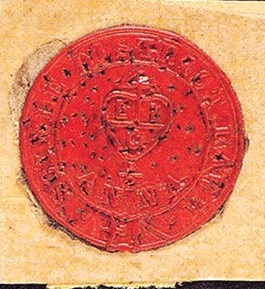
The Indian Post Office was established in 1837. In 1850, there were four post offices in the province of Sindh — Sukkur, Shikarpur, Hyderabad, and Karachi. Sir Henry Bartle Frere took to modernise the postal system; in concert with Edward Lees Coffey, the Postmaster of Karachi, he issued the first stamp for India, famously known as ‘Scinde Dawk’. On 1st July 1852, the red half anna Scinde Dawk became Asia’s first postage stamp. India was the first in Asia and 10th in the world to issue a postal stamp. The design on the stamps depicts a heart-shaped device divided into three segments, each containing one of the letters E.I.C. of the East India Company. This introduced inexpensive and uniform postal rates.
The Scinde Dawk stamps remained in circulation for just over two years from July 1, 1852, to September 30, 1854. However, the withdrawal order was not fully implemented until later. The then Director-General of the Posts, India, received a letter in June 1856 that was addressed to him. That letter bore Scinde Dawk stamp adhered on it. He immediately took notice of the situation and the balance stock was forthwith destroyed by the collector of Karachi.
ScindeDawk1852
Posted in Karachi History | Leave a comment

Baba Island

By Dr. Sohail Ansari 

AnsariSohail2018

Karachi is built around a bay which is a natural harbour and protected from storms by a group of small islands: Baba, Shamspir, Manora and Kiamari (which is no more an island). There are nine islands in close proximity and coastal boundaries of Karachi. Baba Island, one of those, is a small sandy islet opposite Kiamari. The settlement is over 400 years old and is said to be the oldest inhabited island around. This is not known as to how it acquired the name. It is populated by 15000 souls now, compared to 1393 people in 1941. The old residents were called Morriro Pota; they were mainly fishermen. The community is mostly dominated by Sindhi speaking Kutchi people. The British established coal stores on the island. Its narrow winding streets with closely weaved houses have long been free of wheels and traffic congestion. Northwestward, it has a track of mangrove swamps intercepted by numerous creeks. The island was badly hit by the cyclone of 1902. It once used to be popular with the picnickers.

Image may contain: sky, outdoor, water and nature
Posted in Karachi History, Karachi Neighborhoods | Leave a comment

Karachi Phantasmagoria

By Dr. Adnan Zuberi 

Karachi Phantasmagoria by  Sir V S Naipaul a Nobel Laureate in Literature 2001. A chapter regarding Karachi from his book, Among the Believers:An Islamic Journey.
It was 1986/87 and I was the student of Dow Medical College.One of my friend introduced me to  this writer- Sir Vidiadhar Surajprasad Naipaul,and recommend his recently published book: Among the Believers, An Islamic Journey.
He visit karachi twice first in 1962  by ship from Alexandria and next in 1979/80 when he was writing this book.
Following are  his few excerpts from the above mentioned book.
” Before 1947 there was no Pakistan here, there was the only Indian province of Sindh and the British built city of Karachi. The past survived in buildings,  and in names the Club road, Bleak House Road, Clifton, Jutland Lines, Abyssina Lines, Jacob Lines, McNeil Road, Clayton Quarters, Napier Barracks, Soldier Bazaar.”
” And one afternoon, walking from the Intercontinental down the two miles road that led, through land reclaimed from  mangrove swamp to the Chinna creek and Napier Mole Bridge, I was surprised at the edge of the creek, beside the bridge and amid the works for the new dock, to see a memorial plaque with Hindu names on a wall.”
V S Naipaul born in 1932 in Trinidad, West Indies, in an Indian family. His grand parents came from india to work as labourers in sugarcane plantations. In early 50s he won the scholarship and got the admission in Oxford. In 1996 he met Nadira Alvi, a Pakistani Journalist 20 years younger to Sir Naipaul, at the residence of US counsel general.  After the death of his wife, in 1996 he married to Nadira Alvi. Sir V S Naipaul died on 11 August 2018 in London.
Awards: 1971 Booker Prize, 1990 Knighthood, 2001 Nobel for literature
In 2006 I had a chance to see Mr Naipaul’s glimps in British Library, London.
Photos. Sir V S Naipaul and Lady Nadira Naipaul


Posted in Books on Karachi | 1 Comment

Where I Shopped in Karachi….

By Dr. Yasmeen Kazi 

Where did your families do their shopping in the Fifties? My family bought groceries at Noorani Store and my Khala’s family from Regal Provision Store. My school textbooks were bought from Iqbal Kitab Ghar and stationary from Afzal Book Depot. I got my comics from Paramount Book Stall and my sisters got their subscription magazines, Woman’s Own, My Home and Woman and Home. I also got Tell A Tale Books, Tiny Tales, Humpty Dumpty and Children’s Digest from Iqbal Kitab Ghar. My occasional big toys were from Regal Toyland and small plastic dolls, plastic toys from Bohri Bazar and the balloon man vending in the street. My candy was from a shop in Bohri Bazar known as Shop Number Two. My shoes were from Beauty or Fitrite.

    • Arup Chowdhury We did our grocery shopping from Zeba Store in Narayanganj in the 60s, books were bought from school who imported most of them from UK….stationery from Rajendra store…comics toys etc from New Market Dhaka…candy ice cream and other goodies from ZeSee More
  • Salma Anwar Wow such amazing and precise memory..I got my shoes mostely from fitright , Montana and English boot house all on elfee..clothes if ready made from Riyadh children’s ready made in the lanes connecting elfee.books and comics from title bits book stall
  • Sarah Ansar Kheiri I remember going to Bohri Bazar with parents for Eid shopping. My mom and khala used to buy shoes mostly from Fitrite. Our school uniforms from Rasheed son’s shop in Bohri Bazar. For any weddings in the family Mehboob Cloth and Jama Cloth markets were
    M Haneef Shaikh Since we lived in Ranchore Line adjascent to Typhoon’s Building and Urdu College groceries were done from a Ration Shop owned by a Ismaili. My dad used to settle the payments on monthly basis. The meat from Sattar in Sitara Market, Poona Bhai Tower,
    Anjum Jalal Our daily groceries servant brought from gol market near NewTown Masjid,and bread and butter from New Town Bakery.Monthly grocery from Empress Market my Mother bought herself.Clothes and shoes from Sadar or Bundar Road .Sugar and other things from the See More
  • Razi Khan Bhadur abad…Uniersal stores, society stores, imtiaz,when he was a toddler and used to sit behind big bags of rice and sugar while his father would do all the costumer dealing, he would just sit idle…but now…it us just unbelievable how he rose from that small grocery shop. Already owns every shop in his past neighborhood. Even many bungalows being rented or bought as his godowns!
  • Razi Khan Madina Bakery….still I get favourite rusks from there…old bakery @ Zam zam has been demolished…but he already had bought neat shop just in front…keeping his customer happy..never gave up on quality…55 years
  • Sheema Sayeed My clothes from ,some shop in Bohri bazar ,or Ryadh ,or were stitched by eldest sister and traditional clothes like churidar pajama ,gharara ,by a relative .s
    shoes from English boot house or Uniform shoes by bata ,and fancy slippers from fitrite ,or Montina .
    Groceries from Abdul stores ,and some shop in nazimabad as our cook went with amma ,for it .See More
    • Mona Alavi When we were young in 70s we use to get school books & comics from Tariq book shop & there was another shop there too( I forgot the name) in dupatta galli,Tariq rd. Monthly grocery from Empress market, meat chicken etc from Tariq rd bazar.
  • Faiza Ahmed I can relate to most of the shops mentioned. Comics from Tit bits, magazines from Grinich, Pak American or Victoria book store all on Elphi. Course books,stationary etc from Anthony Cortino and ofcourse shoes from Fitrite and no where else!!
  • Saad Bashir Hassan M Farooqi your description of the Bahadurabad shops is exactly as I remember them.
    I used Kino Photo quite a bit for passport sized photographs required for official purposes.
    For other photos my parents always went to Car Studios on Zaibunnisa Street (opp. Zafar Marbles.)
  • Farzana Maqsood We lived in Karachi from 1966 we lived on block six PECHS nursery market was the nearest we got everything from there for books and school stuff we used to go to Taj book store but for shoes we used to go to English boot house in saddar mummy used to go to Empress Market to get the groceries like rice daal sugar all the dry stuff for the whole month …
    • Arifa Mashhood Hamid Farzana Maqsood we lived in block 6 too. My family moved to our home (when I was 6 months old) in July 1958 and were there until mid 1977, the best years growing up. Our house was opposite Nursery, bang across from Naumania Mosque in the Tiwana house (See More
      Manage
Posted in Karachi Recalled | Leave a comment

Karachi Under Bubonic Plague 1890s

By Dr. Adnan Zuberi 

Karachi under Plague (Bubonic) Pandemic 1890s
Third pandemic Plague was originated in Yunnan, China in 1850s.
It spread to Port Cities right from Calcutta, Pune, Bombay and Karachi. It further travel to west via Jeddah and Red Sea to the europe and US.
British Colonial govt sets Quarantine in Karachi and created Committees.
These Segregation camps were named as Ranchore, Keamari, Garden Quarters etc etc
This pandemic killed almost 10 millions in India and 2 millions in China alone.
A french Physician, Bacteriologist and Researcher Dr Paul Simmond visited Karachi for his experimental Antiserum to inject and treat the plague. In photo Dr Simmond injecting a vaccine in a patient in Karachi
This pandemic was effectively last till 1959-60, almost 200 patients per year
Photos: Courtesy Wellcome Collection, London
.

Image may contain: one or more people and dog
Image may contain: 9 people
Image may contain: 22 people
Image may contain: 4 people
Image may contain: one or more people
Posted in Karachi History | Leave a comment

Quarantine in Karachi 1890

By Dr. Saad Bashir 

Quarantine/detention centre in Karachi 1890 – for plague control

The third plague pandemic was a major bubonic plague pandemic that began in Yunnan, China, in 1855 during the fifth year of the Xianfeng Emperor of the Qing dynasty.

This episode of bubonic plague spread to all inhabited continents, and ultimately led to more than 12 million deaths in India and China, with about 10 million killed in India alone.

According to the World Health Organization, the pandemic was considered active until 1960, when worldwide casualties dropped to 200 per year.
(Wikipedia)


Image may contain: 2 people, people standing
Posted in Karachi History | Leave a comment

Brigadier Arthur Edward Cumming

By Dr. Adnan Zuberi 

Brigadier Arthur Edward Cumming
A Born Karachiite, Awarded Victoria Cross
Victoria Cross: The most prestigious and highest award of British Govt. The personnel of British armed forces are the recipient. This award was set during Crimean War in 1854. Mate Charles David Lucas was the first recipient of VC. Khudad Khan was the first Indian who received VC when he shows his bravery at Belgium front in WW1.
A E Cumming born June 1896 in Karachi in Scottish family. His father was a soldier stationed in Karachi. Cumming at completion of his education in Karachi joined British Army and he went to Palestine and Iraq during WW1. He was awarded Military Cross for his bravery. At outbreak of WW2 Cumming was in Frontier Force Regiment and went to Malay and Singapore. He fought with bravery and gave resistance to Japanese. He was awarded Victoria Cross in 1947. And Order of British Empire ( OBE )
Brigadier A E Cumming died in 1971 and cremated in Edinburgh.

Image may contain: one or more people and closeup
Posted in Contributions by British | Leave a comment

Prof. Muhammed Raziuddin Siddiqui

By Dr. Adnan Zuberi

Prof Muhammed Raziuddin Siddiqui
A Karachiite, student of Albert EINSTEIN
Born 1908 Hyderabad Deccan
Died 1998 Islamabad
Following is the excerpt of an article written by Prof K Stevenson
In an Indian Journal
Dr Siddiqui was born in Hyderabad, an eminent scholar, Theoretical Physicist and Mathmetician and illustrious Alumni of Osmania University
He was the 7th VC of Osmania University 1947-48 before migration to Pakistan
Dr Siddiqui has also learned Arbic, Persian and Arts
Hyderabad Govt awarded him scholarship for his advance studies in Europe
Cambridge 1926-28 MA in Mathematics under prof Paul Dirac
Germany 1928-30 MSc Mathematics and M Phil in Quantum Physics under Albert EINSTEIN and Karl Heisenberg a Nobel Laureate
He submitted his thesis on famous Theory of Relativity and Nuclear Energy. PhD in Theoritical Physics from University of Leipzig
Paris 1930 he did post doctoral research.
Then he return to India and became the Director in the Institute of Scientific Research of Osmania University . He was the Fellow of Indian National National Science Academy and president of Indian Mathemetical society
1948 or 1950 migrated to then capital city Karachi Pakistan. He joined Karachi University teaching Faculty in Applied Mathematics
1953-58 served as VC of Peshawar University
1960-64 Sindh University
1964-1972 Quaid e Azam University Islamabad
He helped in establishment of Pakistan Atomic Energy Commission and worked in Theoretical Physics in order to develop a nuclear bomb
At request of Mr Z A Bhutto he accepted a position of mentor of young academi scientists
As director of Mathematical Physics Group was tasked Mathematical Calculation in Fission reaction and Supercomputing and had reported directly to Dr Abdul Salam, a Nobel Laureate.
Government of Pakistan awarded him Nishan e Imtiaz, Hilal e Imtiaz and Sitara e Imtiaz
In January 1998 this Nobel Physicist, Scholar, Mathematician and Art Lover finally left for his heavenly abode

Image may contain: one or more people and closeup


Posted in Educational Institutions of Karachi | Leave a comment