By Amin H. Karim MD








By Amin H. Karim MD
The illustrious history of Karachi
(Photo and text courtesy of Dr. Saad Bashir)
A delegation of the Muslims of Karachi visiting Turkey in 1897 to offer congratulations to the Sultan on the Turkish victory over Greece.
(The caption is in Turkish, written in its original script, in Arabic and in French.)

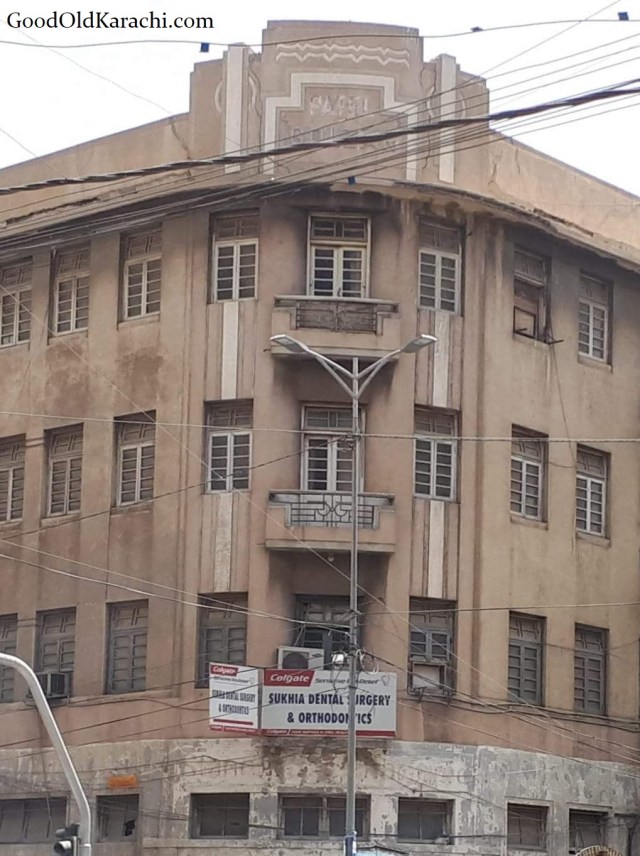
Patel Golzar Chambers located at the southeast corner of Abdullah Haroon Road and Shahrah-e-Liaquat (Old Clarke Street) across from the Old Paradise Cinema (now Paradise Market). Dr. Sukhia’s grandfather established the Sukhia Dental Surgery; Dr. Arif Alvi (President of Pakistan) and his father also had practices in this building which still exists. The owners were printers.
(Photo and post on FaceBook are courtesy of Dr. Syed Zafarullah.
Recent photos will be added here later.
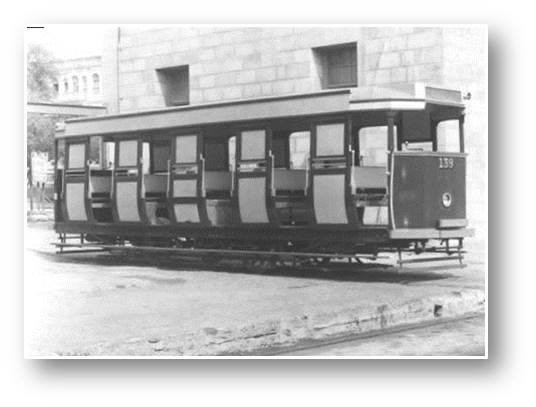
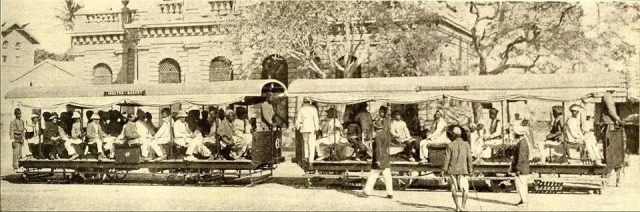
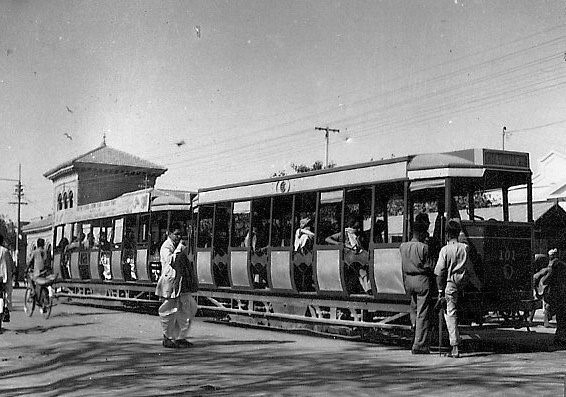
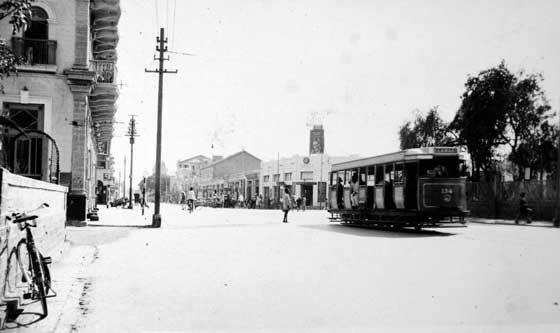
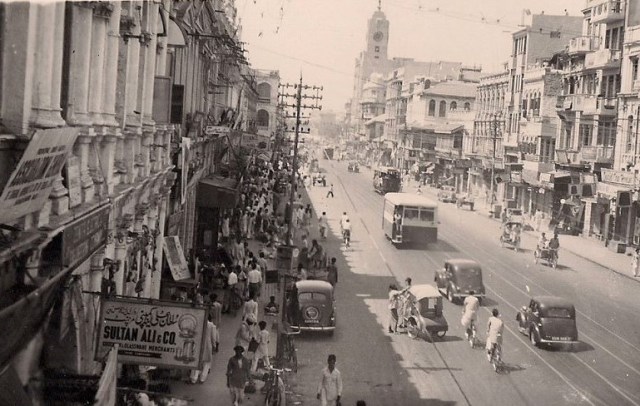
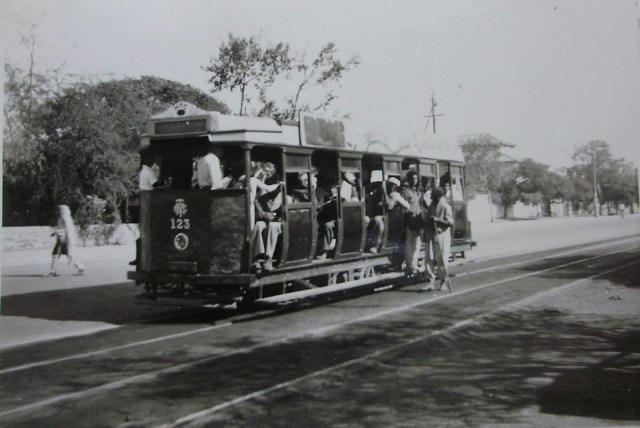
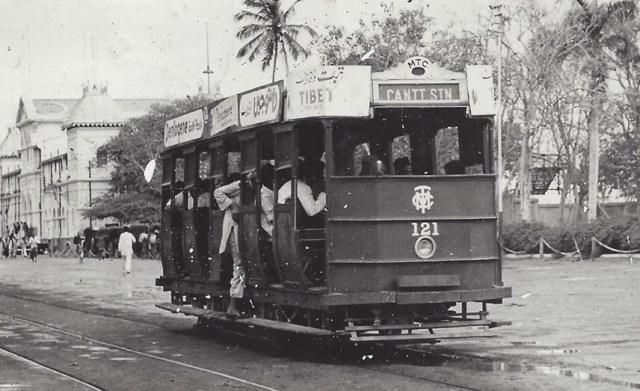
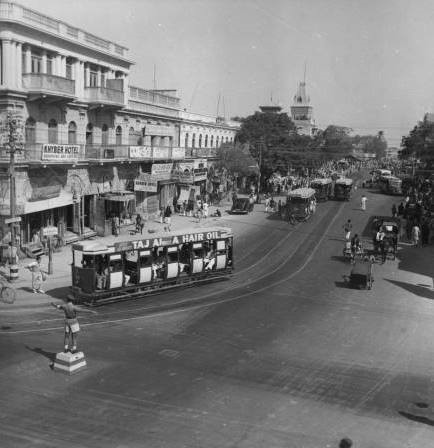
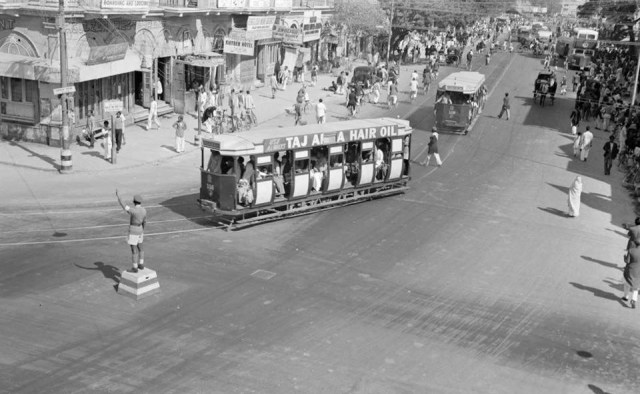
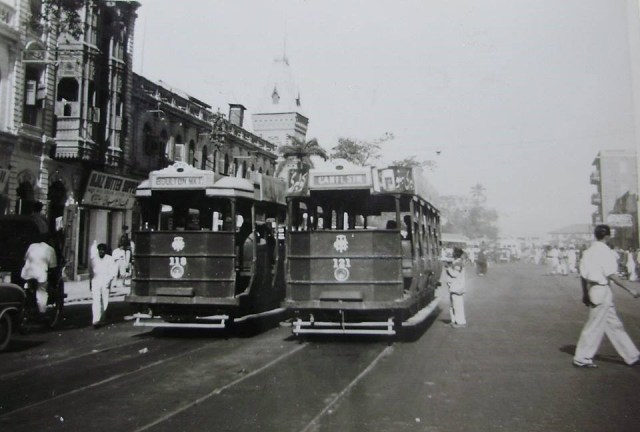
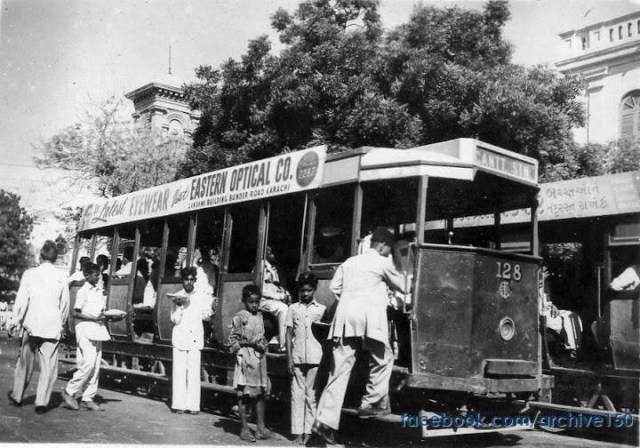
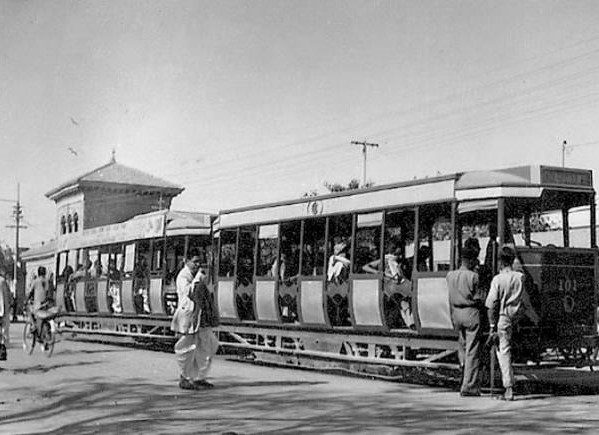
TRAMS OF KARACHI
By Menin Rodrigues

The idea of a tramway system for Karachi was conceived and a tender for its construction was first made in 1881. On February 8, 1883 a plan for a tramway was drawn up and permission obtained from the government for the use of steam-powered trams. In October 1884 construction was started. John Brunton was the Chief Engineer of the project. The tramway was opened on April 20, 1885 employing steam-powered cars. The opening ceremony took place near St Andrew’s Church (Abdullah Haroon Road and Sharah-e-Liaquat).


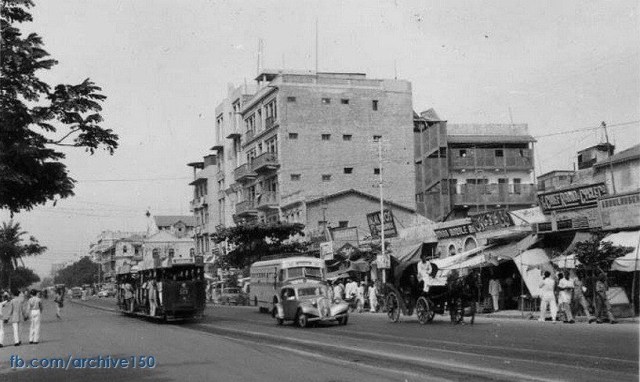
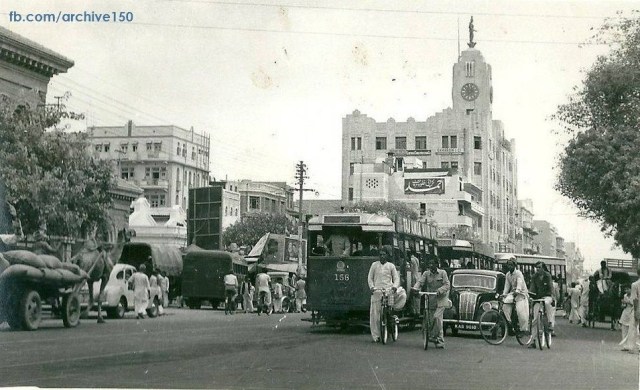
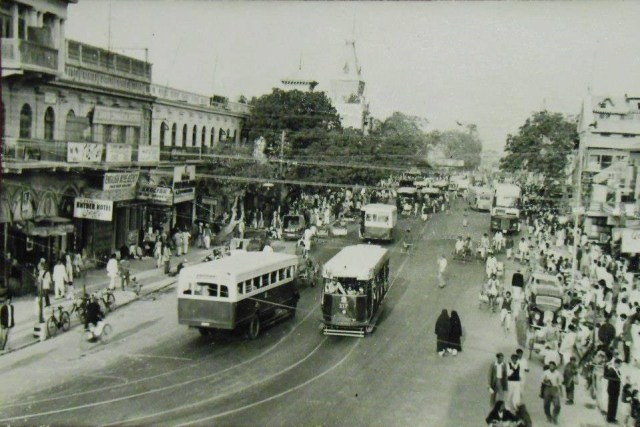
By Dr. Sohail Ansari

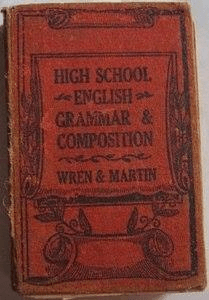
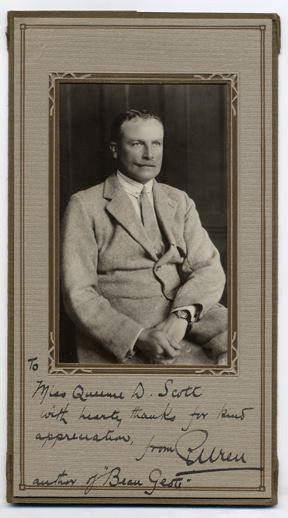
A part of curriculum in India since 1935 that carried on following partition, High School English Grammar and Composition By Wren and Martin was included in our school books as well. Most will recall the book.
One of its authors, Major Percival Christopher Wren had many facets to his life. An Oxford graduate, he worked as a sailor, boxer, schoolmaster, college principal, journalist, explorer, hunter, adventurer, officer attached to an Indian infantry regiment, served in the French Foreign Legion, the English cavalry as an officer with the Indian defence force as assistant director of education, a novelist and author. P. C. Wren joined the Indian Education Service in 1903 and served as headmaster of NJV High School in Karachi, 1904-1906. Between 1903 and 1907 he also worked with the Educational Inspectorate for Sindh and at a teachers’ training college. P. C. Wren and H. Martin wrote this Grammar and Composition for the children of British officers in India. It was taught in Burma as well. Copyrights for the original edition were held by Maneckji Education Trust of Bombay. Wren’s son was born in Karachi. It was in that very city where he met his second wife. His son, Percival Rupert Christopher Wren, was born of his first wife Alice Lucille in Karachi on 18th February 1904. Alice died in Poona in 1914. He married Isabel in 1927 and adapted her son (from her first marriage) Alan Graham-Smith who became the sole administrator of his estate.
It was P. C. Wren who recorded the events linked to the curse of a Pir on the site later occupied by US Embassy/Consulate. In 1912, he documented the curse on a site on Abdullah Haroon Road and documented about ‘Sudden Death Lodge’ on that location. Incidentally years later that very same cursed and haunted area was chosen for the US embassy/consulate general. There is a legend attached to it. Well over a century ago, Sohrabji Rustomji built a beautiful residence on this very spot where once was the grave a Pir. A fakir who had sat for fifty years besides his Master’s (Pir’s) tomb asked Rustomji not to trespass upon that grave under a pipal tree. However, Rich Rustomji rejected the plea and was cursed. As a consequence four workmen died mysteriously during the course of its construction, so did members of the Rustomji family. Later Reid family occupied the residence and met the similar fate. That building was razed to ground in 1925 and laid vacant for over 30 years until the construction of the embassy that had to be altered from the original design and receded leaving the spot of the grave aside

By Menin Rodrigues
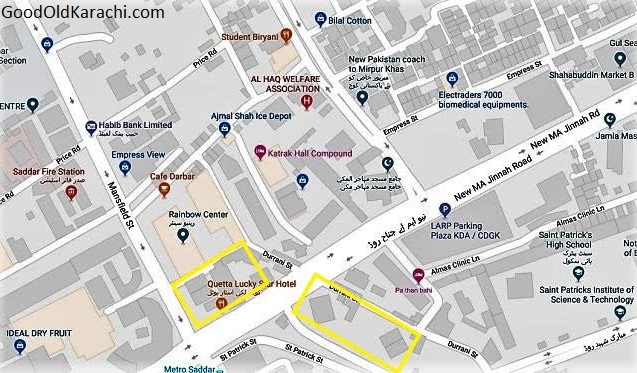
The 117 Depot Lines compound was a large tract of land in proper Saddar, originally
(pre-partition) owned by Edulji Dinshaw. After the 1965 War this piece of land was
designated as Evacuee Trust property and all families living here paid our rents to the
Commissioner’s office.
The west side of the compound faced Empress Market and the East towards St. Patrick’s
High School. It was a gated community. The two front main entrances (one facing
Preedy Street and the other opening up on Mansfield Street, were sandwiched between
Saddar Dawakhana, a dispensing pharmacy of herbal medicines, owned by our
neighbors who we called Delhi-Wallas. The boys went to St. Pats.
There were four residential blocks in this space, 117/44 (nearest to the market), 117/45
(where I lived the first 21 years of my life), 117/46 and 117/47 (nearest to St. Pat’s).
There were many large gated communities in that vicinity, the nearest separated by a
lane, was the Katrak Compound where there were many 3-storey buildings with
multiple flats for Parsis only. The old Katrak Hall and Billiards Room was also here.
Most residential neighborhoods in that part of Saddar leading all the way to M.A. Jinnah
Road had open spaces where hundreds of residents enjoyed playing a variety of games,
cricket, hockey, football, netball, badminton and whole lot more. Competitive matches
between compound/block teams on weekends was a common sight. Kite-flying was a
spectacular sight, the open skies were full of colorful ‘guddies’ and chants of ‘bo-ka’ata’
everywhere as professional kite-flyers thronged these compounds, 117 Depot Lines was
no exception. Tens of boys ran after getaway kites.
117 Depot Lines was cosmopolitan in nature, a mix of communities, mostly Goan/Tamil
Christians but there were Parsis, Punjabis, Pathans, Katchi and Gujrati speaking
families too. The compound was famous because many teachers from the nearby St. Pats
and St. Joseph’s schools lived here. The most interesting aspect of community living
here was that we all lived as one big family! Many could speak each other’s languages
and we all celebrated each other’s special occasions. Good old Karachi!
Christmas, Eid and Navroze were the centerpiece occasions of our living together, each
family celebrating the season joyously by sharing food and visiting homes. During Eid,
the entire compound was festive with people going for Eid-prayers and hordes of
vendors lining up to offer colorful balloons to the children. During Christmas eve, the
popular St. Patrick’s High School Band would go from compound to compound to play
Christmas carols and popular marches; neighborhood groups of girls and boys went
carol-singing throughout the nights. It was a brilliant sight, Depot Lines and most of
Saddar areas (Little Goa) were lined up with twinkling Christmas stars adorning family
homes. On Navroze, we eagerly awaited the BVS Parsi School Bugle Band come to the
Katrak and nearby Parsi compounds in the wee hours of the morning. Though I couldn’t
go out at that time of the night, I would simply stay awake all-night on my bed and listen
to the first sounds of the bugles. Its so wonderful, I can still remember the tunes they
played.
Imagine a Pathan girl and boy playing with the rest of the children, games like 7-Tiles
(Pittu), Skipping ropes, Rounders, and all of them conversing in a choice of languages,
English, Pushtu, Urdu and Konkani. Yes, the kids in the Pathan family spoke Konkani!
Isn’t it amazing? Some of us would jump the wall and go to the nearby Parsi compound
and play cricket, marbles and fly kites though it was a restricted compound. So,
understanding Gujrati was not very difficult, given the fact, that the Parsis were quite
colorful and generous in their choice of words.
In the 1970s the compound was converted into a parking lot for the newly introduced
Yellow Vans (the old Ford and Toyota versions, later to be called Yellow Devils) and
which eventually became their auto-mechanic workshop. The beautiful cinder/mud
compound where we played our sport had become very dirty, diesel-oil spread
everywhere and not very safe for the old residents. Earlier in the 1960s during the Ayub-
era the compound was also converted into a Bakra-Pir and for some years as Storage for
Fruit Boxes and their 4-wheel carts. We moved from here in 1977 but retained our
house.
After the 1980s, the 117 Depot Lines compound met with many snags, the government
didn’t quite know what to do with it. Being near the Cantonment, the military estates
took over the compound in the late 1980s; they apparently wanted to demolish the old
houses for a new residential complex but were in a quandary displacing senior and frail
residents of that place, living there since the 1930s/40s. They kept jawans in the
compound for several years until the mid-1990s when it changed hands with the City-
Government. They wanted to construct a major 100-feet wide road connecting Preedy
Street, running through the 117 Depot Lines compound, part of the Katrak compound,
through the Lines Area and curving north onward to the Round-about east side of the
mausoleum.
The 117 Depot Lines compound still survives but stands divided between the road, all
blocks are intact but disfigured, except one which was sliced a vee-bit to make way for
the road. It’s in a mess now, a hawkers’ paradise but a gold-mine! I hope and pray that
residents who are still living there get a fair share of what is to become of 117 Depot
Lines in the future.
TAILPIENCE: The most unfortunate part of this whole episode (a tale from another
time and era) and a trauma for the residents was the intrusion of privacy in 1975 by an
ordinary friendly hawker who came to park his cart (thela) inside the compound and
eventually bull-dozed his way to occupy a good portion of the compound towards the
Empress Market side. Those who have seen the premises lately will know what has
happened to the once-pristine 117 Depot Lines.
Dr. Sohail Ansari
1861, May 13th –
Opened the first railway line (of current Pakistan) for public traffic between Karachi and Kotri, a distance of 105 miles. Incidentally that also happened to be a Monday, 158 years ago.
c 1900: Early morning passenger train reaching Frere Road Station (now called Karachi Cantt) from Kotri.
Let me share the following story from 1906:
WHEAT TRAINS HELD UP
‘It is reported, says a Karachi telegram to a Bombay paper, that robberies of from 25 to 30 bags of wheat, from running trains on the line between Kotri and Karachi, are the order of the day. Almost daily such robberies are perpetrated with impunity. Some of the robbers do not scruple to get on the footboard of the guard’s brake van on each side, and to intimidate the guards by threats of making short work of them if they attempt to make a noise while the others are throwing out the bags from the open trucks to another lot of robbers who are on the line waiting to carry away the bags to be loaded on camels ready outside the fence. It is not known what action the authorities concerned intend taking. In a memorial to the manager some two years back, the guards pointed out the necessity for them to be allowed to carry arms, as their lives are unsafe, especially when the wheat traffic commences. It behoves the railway authorities and police to do something in the matter before anything serious happens.’

The Holy Family Hospital in Karachi, Pakistan was founded in 1948 by the Medical Mission Sisters, a Roman Catholic religious order for women based in Philadelphia,
USA. This was at a time when very few health care facilities existed in Pakistan.
The founder of the Medical Mission Sisters, Dr. Anna Dengel arrived in 1920 in Rawalpindi to work as a mission doctor at the 16-bed St. Catherine's Hospital. The
hospital evolved into the Holy Family Hospital and continued to operate under the auspices of the Roman Catholica Diocese of Islamabad-Rawalpindi until 1977. In that
year the diocese was no longer able to bear the financial burden of running the hospital and handed it over to the Government of Punjab. The Medical Mission Sisters went to
work at the Holy Family Hospital, Karachi.
Three of these Sisters (see photo) worked together from 1967 to 2009 at the Hospital. Sister Elona Stanchak served as Administrator of the 225-bed hospital; Sister Celine
Bernier was Directress of Nursing Services; and Sister Helen Marie McGrath taught at e hospital's nursing school. In 2009 they left Pakistan to return to the US.
The institution is a national heritage and a prized possession of the Roman Catholic Archdiocese of Karachi right in the heart of a bustling city. It has the potential to expand and upgrade many of its facilities. Nearly 100 students are enrolled at the Holy Family Hospital Nursing School where thousands of nurses have graduated and now spread all over the country and abroad. The students spend 3
years in basic nursing, and a 4th year in midwifery training. The school is registered with the Pakistan Nursing Council.
The hospital is located off M.A. Jinnah Road on a large plot of land with ample parking and beautiful trees and shrubbery. It also has an Out-Patients Department (OPD) and caters to many people from all parts of the city because of its charitable nature. The hospital has a large extra-curricular facility, the Holy Family Hospital auditorium.
In September 2004 the Health department had identified some private hospitals, including Holy Family Hospital, as having the facilities where trauma patients could be treated. This is recognition of the high-quality care provided and the important role played by the hospital over the years.

By Menin Rodriquez
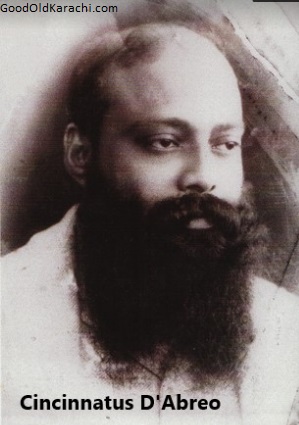
He was born on 24 September 1862. His father, Manuel D’Abreo had migrated
to Sindh in 1846. Cincinnatus was married to Maggie Gomes with whom he had five
children, Joe, Maggie, Alfred, Gwennie and Bill.
He was educated at St Patrick’s High School, Karachi. However, he had to
discontinue his studies at the age of 16 and earn a living, due to the unfortunate death
of his father. He was first employed by the Civil and Military Gazette Press as a
clerk. Two years later he joined the British business, Forbes, Forbes and Campbell,
engaged in the import and export trade. In 1889, at the age of 27, he joined the Sind
Commissioner’s office as a clerk. In 1895 he was promoted to the position of
assistant collector of Sukkur and finally was elected president of the municipality.
In 1897 he returned to Karachi, where he occupied various posts such as assistant collector of customs, and shipping master. He was appointed acting collector of customs on two occasions. He was a councillor of Karachi Municipality for many years and made a remarkable contribution to civic life in Karachi.
D’Abreo was instrumental in starting the Karachi Goan Association. He also played a
part in the launch of the Indian Flour Mills, the Union Press, and the Indian Life
Assurance Company, of which he was secretary for many years. He was also one of the
directors of the Karachi Building and Development Company.
In 1917 he retired from service and devoted himself to various social activities. He was
held in high esteem by the people of Karachi, who named him among the 12 leading
citizens of Sindh. He died on 25 January 1929.
D’Abreo acquired 1,000 acres (4.0 km 2 ) of land outside the cantonment. In 1908, this
was developed into Karachi’s first planned township named Cincinnatus Town, which
today forms part of Garden East (Wikipedia)
MENIN RODRIGUES (MR Archive 2010)
MORE: In the beginning of the 20th century, as Karachi blossomed into a scenic
littoral region and its demographics began to change bit by bit, residential areas were
developed in those parts of the city where there was room for constructing new
houses. As a result, some very well-planned colonies came into being. One of them was
Cincinnatus Town. Cincinnatus Town was named after Cincinnatus Fabian D’Abreo, a kind-hearted gentleman who significantly contributed both to the well-being of his
community and to beautifying Karachi landscape. The locality later came to be known
as Garden East and Garden West….The Garden vicinity, before partition of the
subcontinent, used to be a clean-as-a-whistle part of the city. (Source: (Dawn:
Metropolitan, Page 21, March 31, 2013)

Karachi’s aerodrome has hosted many pioneering aviators and witnessed a number of historic flying records.
Amy Johnson was one of those pioneering English aviator and the first female pilot to fly alone from Britain to Australia.
Her solo journey from Britain to Australia had Karachi en-route. By the time she had reached Karachi on 10th May 1930 landing at 4.10 pm, she was front page news and became a celebrity.
The flight from Croydon took just six days (two days ahead of earlier record set by Hinkler) and she received a hero’s welcome. She stayed as a guest of Mr P. E. Percival, the Commissioner in Sindh at Government House.
Following is the news from 1930 when she was in Karachi.
TRIBUTE BY KARACHI MUNICIPALITY.
KARACHI, May 11, 1930.
Miss Johnson was garlanded and presented with a floral bouquet by the chief officer of the Karachi Municipality prior to her departure for Australia this morning. The Royal Air Force aeroplane and Wing Commander Crosbie, local agent of the De Havilland Company, in his Moth plane, escorted her for some distance towards Allahabad.


 Good Old Karachi