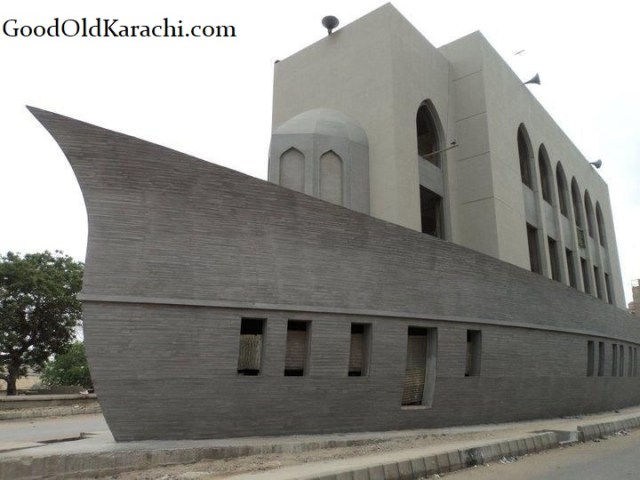
This masjid ia the Katchi Memon Masjid in Old Dhobi Ghat. Karachi.
This masjid ia the Katchi Memon Masjid in Old Dhobi Ghat. Karachi.

A pictorial hardcover on Karachi published by the Pak American Commercial inc on Zaibunnisa Street Karachi in 1986; by Mohammed Amin, Duncan Willetts and Brian Tetley. It was printed in Hong Kong. Great photos of Karachi!
By Wayne Croning
,


The icon of Karachi, stood out in 1889, stood the test of time, and as it is being cleaned out today, still stands out in all its glory. The main entrance still houses the clock tower, the four corners with smaller towers surround the inner courtyard. What a bustling market indeed!
As I can recall, from my early childhood days, we often walked there from our home at Mehta House on Frere Street. Woven basket in hand, our mother led us in through the
massive gated entrance with the towering clock tower. The steps leading into the entrance at that time showed signs of wear, polished and worn down by countless people climbing up into its cool and dark interior and then out into the sunlit courtyard.
Little grocery stores lined the left wing as you entered; same on the right. All these stores were raised at least three or four feet off the main floor of the building. Foreign canned goods could be purchased at some of the stores, and this was usually our first stop, before heading to the vegetable/fish/meat section of the market. I loved going here and I hated it at the same time. I loved the smell of the spices as you entered the main building, loved the smell of fresh green chillies and other vegetables.
What really turned me off were the meat and fish sections. Chunks of meat hung from hooks, goats hooves, cows hooves, goat heads, goat organs, including liver, lung, heart and other unmentionables all openly displayed, the stench turned my stomach and the sight was not pleasant. Chickens being slaughtered, de-feathered and then cut into pieces
broke my heart and maybe this is why I am not a meat eater. My mother always tried to shield me from these sights, but the eyes cannot escape the obvious.
There were dry fruit vendors, spice vendors, fruit vendors all gathered around the inner courtyard. Bargaining was the norm, we had no plastic bags then, so vegetables were weighed and tossed into our ‘tokri’ or woven basket. Only meat and fish were placed in clear plastic bags or sometimes waxed paper. In those days, not many of us knew what lay below this grand market’s foundation. Today, with unlimited access to information, I have come to learn that human blood, long ago had stained the very soil on which this market was built, including (possible) human remains. And so begins my story…
The Mutiny, as the British called it, began in May 1857 and spread throughout the sub-continent. The War of Independence as we like to call it, began with the Sepoy Rebellion. Different versions of the same story are out there, some linking it to the fact that cartridges used by the Sepoy soldiers were laced with animal fat, both cow and pig. This would have obviously offended both Hindu and Muslim soldiers and was the spark that ignited the revolt. To me, it sounds incredulous as the British would have seen this coming, so why do it in the first place? I think that the
Sepoy soldiers had not been paid for months, the price of food was on the rise; the cantonments were off-limits to the locals; who were getting tired of British rule anyway. What began in Meerut soon spread across the country, it was planned for sure; but not well enough. By the time it
reached Karachi, two soldiers betrayed the other 40 or so Sepoys who were ready to revolt. To counter the attack, the British took quick and deadly action…
On a starry night in May, 1857 a handful of Sepoy soldiers entered the Cantonment in Kurrachee. Shots were fired, and they were taken by surprise when surrounded by British officers and soldiers of the local infantry. Half of the Sepoys were able to escape when they found out they were betrayed. Twenty or so were not so lucky.
“Lay down your weapons now!” they were ordered, surrounded by British soldiers.
Ram Din Pandey and Suraj Bali Tevari stood still, weapons in hand. They whispered to each other.
“If we surrender, all will be lost. If we don’t, they will gun us down.” Pandey looked at Tevari who stared back, desperation in both their eyes.
They ordered their men to lay down their weapons, but still held onto their own rifles.
“I said to lay down your weapons!!” an officer shouted again, aiming his service pistol at both the armed men.
“Let my people go first.” Pandley yelled back gun pointed down
Seconds later a soldier hit him with the wooden stock of his rifle. He fell down, blood dripping from a wound to his head. Tevari put his rifle down. They were soon all arrested, put
in chains and locked up in the military prison. A few of the escaped men were rounded up, their bodies hacked to pieces and thrown in the Lyari river near Mithadar.
After a brief trial, Pandley, Tevari and a few more of their men were sentenced to death. The remaining were sent to Kala Pani (a prison on the Andaman Islands). On a dark night,
and not unknown by the locals, the hangings took place. A pit was dug, bodies were cut to pieces and thrown in and buried.
For the ringleaders, a more horrible fate awaited.
“Let it be known to all your people, that any kind of revolt or conspiracy carried out against her Majesty will not be tolerated. Your execution is to be carried out in broad daylight on the parade grounds tomorrow morning.” The military judge did not mince his words.
They were not allowed to meet with their family members, nor were they given the right to speak in their defence. The next morning, in full view of the public, Pandley and Tevari were tied in front of two cannons, blindfolded and blown to bits. Locals were ordered to pick up body parts that were thrown into the drain on Bunder Road. No proper burial, no chance for families to mourn.
In time, the British noticed that flowers and wreaths were being laid out on the execution grounds (Parade ground). It took several years, but out of concern that the locals would build a shrine to the people who had laid down their lives for freedom, claiming them to be martyrs for the cause, they decided to build a large market on the grounds. Karachi’s famous engineer James Strachen came up with the plans in the late 1800’s and the foundation was laid during
Queen Victoria’s Golden Jubilee. A gift for the people! Indeed!! Ironically, the market was for “whites” only and not open for the locals to shop.
Well, the British did succeed in preventing a shrine for the Freedom Fighters to be constructed on the site. Over time, their struggle and sacrifice was forgotten; but history cannot be erased. With information out there, we can remember, in our hearts and in our minds and with the restoration of the Market, that is really a memorial to our fallen.
Thanks for reading,
wayne
Nov.16, 2018
(Pic was taken by my dad, inner courtyard, Empress Market, late 60’s)

Tea with Tee.
By
Raju Jamil

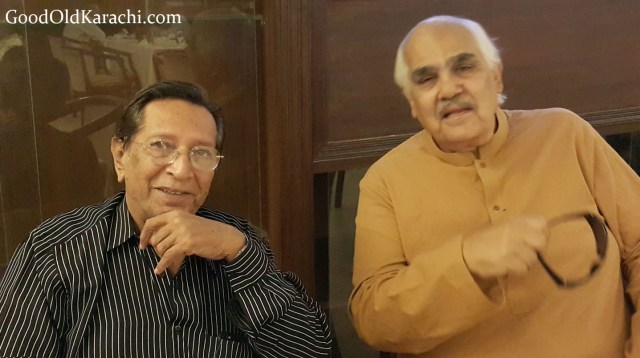
The TEE I’ve known since 1966-67 from Radio Pakistan, Karachi (1966-67) to PTV (1970) ….that I was his best man at his valima in 1972.
When Pakistan was growing with a slow yet an impacting impression on those who, somehow, knew that listening to the Radio, would play a huge role in their life going forward in many ways, the fortunate ones understood and almost all those wonder years, were fortunate ones.
There was this time at the Radio Pakistan, Karachi when the radio programs which did not essentially involve the publicity of the govt and the leader or Governor General or the Minister—–became the talk of the town—specially the dramas.
The Baba-e-Drama at the RPK was Zulfiqar Ali Bukhari the brother of the famous writer of class Pitras Bukhari.
While Radio dramas took birth, the concept of dedicating one Saturday per week for dramas at 8 PM became a reality (and a memory now) when the ever famous series “Studio Number Nau (9)” was introduced sometime in 1960-61.
Zulfiqar Ali Bukhari’s great drama…one of the firsts on RPK “Lighthouse Ka Muhafiz” (probably inspired by the famous Hemingway novel “Old Man And The Sea”) was a rocker….where he played two characters of his son and as his father…with story going as the son bitten by a Dog, is in pain, bitterly crying for some water being thirsty which his father is resisting because of some medical reasons that it should not be given to a dog bitten person. The drama was so powerful and touching that it brought tears to many eyes…even at our home when we were glued to our PYE Radio set…holding the aerial by the two fingers for a clearer reception due to earthing it required and the medium wave having poor quality in those days.
“Lighthouse Ka Muhafiz” was again reproduced by Abdul Majid later…where he too played the role of his son and the father. He was good too…but a bit step down over Bukhari Sahab’s.
Produced by the emperors RPK producers like; Razi Akhtar Shauq, Farooq Jahan Taimuri et al., with background music and effects by M. A. Razzak, the SNN, became one of the most popular and infectious drama series in the history of Radio Pakistan’s any station or broadcasting house in Pakistan.
The artiste who became dreams of the listeners for the melodious, variated, base, soft, low, romantic and commanding voices created an unseen in real life, figures as the ideals of thousands then in sixties.
Some of the names I remember being a diehard of the RPK’ “Studio Number Nau” were; Fatima Khanum (khala of Shirin Azim of PTV), Humaira Naeem, Ibrahim Nafees, S.M.Saleem, Mughal Bashar, Sahab Qazilbash, Irfan Ali, Mahmood Ali, Zafar Siddiqui, Abdul Majid, Qayyum Arif…..and from late 1962 some unforgettable artiste’ like Talat Hussain, Sajida Syed, Qazi Wajid, Rehana Siddiqui, Talat Sidiqui…started appearing in some of the most memorable Radio plays I still remember with the stories by heart, like;
“Raahain” (Ibrahim Nafees), “Rooh Ka Chakkar” (Talat Hussain and Sajida Syed) and “Ilteeja” (Humaira Naeem, Fatima Khanum and Abdul Majid)..and scores or more…..
Studio number Nau…..survived till the entry of Hasina Moin as a writer and Neelofer Alim Abbasi, as an amazing find from the students program “Bazm-e-Talaba” where she performed in a drama competition for students.
The annual drama festival “Jashn-e-Tamseel” was like the “Super Bowl” of America for the Radio Drama freaks……weeks of planning for dinner GTs were done to hear the drama together. A broomstick was kept handy for a swash on the head of anyone who spoke or tried to predict what will happen next or in the end.
Radio Pakistan’s “Aap Ke Khatt” is on records to have received over 5000 letters in one week on some play broadcast during one of the Jashn e Tamseel of late sixties….begging, pleading and demanding that the drama be soon repeated.
Of all these artiste on Radio Pakistan’s drama circle, it was ONE who emerged clearly with a firm affirmation that he is there to conquer the PTV when it came to Karachi on 26th November, 1967…..
Yes, I talk about the greatest voice, a handsome, young, most talented son of one of the senior most and indeed, most lived announcer of RPK; Aunty Shaista Khanum…..a la; TALAT HUSAIN.
Since Talat had remained my hero from my craze and obvious inheritance of Urdu Adab from my father who was very popular with Radio personalities those days that Urdu was our house inhabitant and a loved member of family which saw some greatest play writes, poets, afsana nigars, intellectuals visiting our house and me making most of taking their autographs and often, being a tea boy and errand runner to them that my love for Urdu Dramas on RPK kind of lived and lives now even and that meeting Talat Hussain on PTV and a bit later….acting with him in a few projects during very early 70’s…….made my dream come true….for the honor and the fact that Talat Hussain, is perhaps, the Emperor of emotions that Roohi Bano was Empress.
Moin Akhtar often had anecdotal references to TH’s long pauses…..but all in spirit and merriment while the fact of the matter remains that there’s been no one till date and I find it very hard to comprehend or believe that there will be anyone matching the class and style and mood of acting like that of Talat Hussain. He made us proud internationally, having appeared in foreign movies with a decisive and apt role. His TV plays carried the story a powerful viewing mostly due to his complete involvement in acting and his character. He was and is…the Lawrence Olivier of Pakistan Showbiz TV that I do declare with conviction. His voice commanded silence and total attention of the viewers……
He has been a bit under the right weather of ailment but he is better and back and ready to again show that his best days are yet to come—you ain’t seen nothing yet.
So….the connoisseurs of productions, the directors overtaking David Lean, should seriously consider Talat Hussain as an asset and capitalise on his great talents amongst what we see as the great rise of park showbiz TV and private productions that the PTV has seriously gilted the Country by backing off from its repute it created even at the neighbours who were peanuts in front of our drama productions…but now way ahead of us.
Thank you Talat Hussain for the huge entertainment you have given the Nation when it had around 75 million populace and continued to do so when it has reached 180 million.
Hail Talat Hussain…..we are so proud to have amongst us at the Showbiz as THE outstanding actor…who proved his mettle, on Radio, TV, Films and Documentaries since 1961…..
Yes…he has been my friend since 1968 and it was me who took him to Karachi Airport that cold morning of 1970 to bid goodbye to him when he proceeded to London for a course of acting at the Royal Academy of Dramatic Arts for six months. He is elder by 6 years or more to me but our hearts enjoy the same age of 18 still…….
PTV is incomplete if we do not talk of Talat Hussain—-the greatest artiste of Pakistan in drama, voice over and on Radio.
Long live Talat Hussain.
-Raju / 2014.
Bahria Icon Tower |
304 m (997 ft)[1] |
62 |
2018 |
Clifton |
Pakistan’s tallest skyscraper |
Bahria Hotel |
245 m (804 ft)[1] |
46 |
2018 |
Karachi |
|
Dolmen Tower 3 |
160 m (525 ft)[2] |
40 |
2018 |
Clifton |
|
Dolmen Tower 4 |
160 m (525 ft)[2] |
40 |
2018 |
Clifton |
|
Bakht Tower |
145 m (476 ft)[3] |
38[3] |
2017 |
Clifton |
|
Arkadians Tower A[4] |
134 m (440 ft) |
35[5][6] |
2019 |
Defence VIII |
|
Hoshang Pearl[7] |
130 m (427 ft)[3] |
34[3] |
2018 |
Civil Line |
|
Metro twin tower 1 |
130 m (427 ft)[citation needed] |
32*2 |
2018 |
Clifton |
|
Metro twin tower 2 |
130 m (427 ft)[citation needed] |
32*2 |
2018 |
Clifton |
|
Com-3 Tower 1[8] |
124 m (407 ft) |
34[9] |
2018 |
Clifton |
|
Com-3 Tower 2[8] |
124 m (407 ft) |
32[9] |
2018 |
Clifton |
|
Ocean Towers |
120 m (394 ft)[10] |
30[10] |
2013 |
Clifton |
Tallest in Pakistan, 2012–2014 |
Mega G4 Tower[11] |
118 m (387 ft)[12] |
30 |
2016 |
Clifton |
First LEED certified building in Pakistan |
Centre Point Tower |
117 m (384 ft)[13] |
28[13] |
2013 |
Defence VI |
|
MCB Tower |
116 m (381 ft) |
29[14] |
2005 |
Downtown |
Tallest in Pakistan, 2005–2012[14] |
70 Riviera |
110 m (361 ft)[15] |
29[13] |
2017 |
Clifton |
|
Coral Tower 1[16] |
107 m (351 ft) |
28[17] |
2018 |
Crescent Bay |
|
Coral Tower 2[16] |
107 m (351 ft) |
28[17] |
2016 |
Crescent Bay |
|
Habib Bank Plaza[18] |
102 m (335 ft)[citation needed] |
24 |
1963 |
Downtown |
Tallest in Asia, 1963–1970 |
Bahria town Tower |
102 m (335 ft) |
26 |
2016 |
Tariq Road |
|
UBL Tower[19] |
101 m (331 ft) |
25 |
2016 |
Downtown |
|
Arkadians tower B[4] |
100 m (328 ft) |
25 |
2018 |
DHA VIII |
|
The Center (JS Tower)[20] |
100 m (328 ft) |
24 |
2016 |
SADDAR |
|
CFTC Tower |
100 m (328 ft) |
23 |
2018 |
Clifton |
|
Royal Tower |
100 m (328 ft) |
22 |
2017 |
DHA |
|
La Grande |
100 m (328 ft) |
23 |
2017 |
N.Nazimabad |
|
BRR Tower |
100 m (328 ft) |
22 |
2014 |
Downtown |
|
ACM Tower |
100 m (328 ft) |
22 |
2018 |
Clifton |
|
Parsa Citi towers |
100 m (328 ft) |
22 |
2016 |
SADDAR |
|
SumSum Grand Residency |
100 m (328 ft) |
22 |
2018 |
P.E.C.H.S |
|
Avari tower |
90 m (295 ft) |
20 |
1970 |
SADDAR |
|
Saima Trade Towers |
90 m (295 ft) |
20 |
1999 |
Downtown |
|
Saima Trade Towers |
90 m (295 ft) |
20 |
1999 |
Downtown |
|
Vincy Residency |
90 m (295 ft) |
20 |
2012 |
Clifton |
|
Royal Arcade |
90 m (295 ft) |
20 |
2018 |
P.E.C.H.S |
|
Eman Blessing |
90 m (295 ft) |
20 |
2018 |
P.E.C.H.S |
|
Zamzam tower |
90 m (295 ft) |
20 |
2018 |
P.E.C.H.S |
|
Saima pari luxurios |
90 m (295 ft) |
20 |
2018 |
P.E.C.H.S |
|
Greens two |
90 m (295 ft) |
20 |
2018 |
P.E.C.H.S |
|
King’s Luxury tower |
90 m (295 ft) |
20 |
2018 |
P.E.C.H.S |
|
Halima Residency |
90 m (295 ft) |
20 |
2018 |
P.E.C.H.S |
|
Sawera Sky tower |
90 m (295 ft) |
20 |
2018 |
P.E.C.H.S |
|
The Residence |
90 m (295 ft) |
20 |
2015 |
Clifton |
|
Majestic tower |
90 m (295 ft) |
20 |
2016 |
Clifton |
|
Lakhani Presidency |
90 m (295 ft) |
20 |
2008 |
Gulshan |
|
Defence Skyline |
90 m (295 ft) |
20 |
2018 |
DHA |
|
Pearl Residency |
90 m (295 ft) |
20 |
2004 |
Gulshan |
|
Saima Royal Residency |
90 m (295 ft) |
20 |
2018 |
Gulshan |
|
Noman Residencia |
90 m (295 ft) |
20 |
2018 |
Scheme 33 |
|
Al Ghafoor tower |
90 m (295 ft) |
20 |
2016 |
Gulshan |
|
Bismillah Blessing |
90 m (295 ft) |
20 |
2014 |
PECHS |
|
Makkah Tower |
90 m (295 ft) |
20 |
2015 |
PECHS |
|
Anum Vista |
90 m (295 ft) |
20 |
2016 |
N.Nazimabad |
|
Saima Paari Point |
90 m (295 ft) |
20 |
2016 |
N.Nazimabad |
|
Euro hitec tower |
90 m (295 ft) |
20 |
2016 |
N.Nazimabad |
|
Euro Regency park |
90 m (295 ft) |
20 |
2016 |
N.Nazimabad |
|
Bakhsi tower |
90 m (295 ft) |
20 |
2016 |
Shr. Faisal |

By
Dr. Sohail Ansari

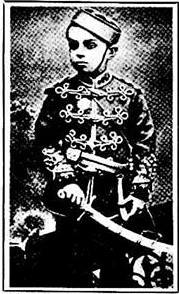
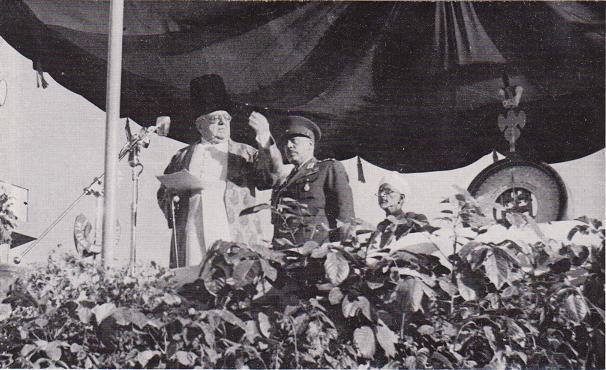
A boy was born 141 years ago on 2nd November 1877 that also happened to be a Friday as today in 2018. The birth took place at the Takri, Honeymoon Lodge, Karachi.
His grandfather was Governor General of the province of Kerman and through a political intrigue he became valuable to the British rule in India.
After his father’s death, he ascended the throne of Imamate at the age of just under 8 years. He grew up under the subtle and tender care of his judicious, learned mother, with the finest of education.
He rose to become one of the founders and the first president of the All-India Muslim League.
To mark the completion of his seventy years of Imamat, the Ismailis decided to weigh their 48th Imam in platinum. That Platinum Jubilee celebration was held at the Aga Khan Gymkhana in Karachi.
This boy was Sir Sultan Muhammed Shah, Aga Khan III.
By
Amin H. Karim
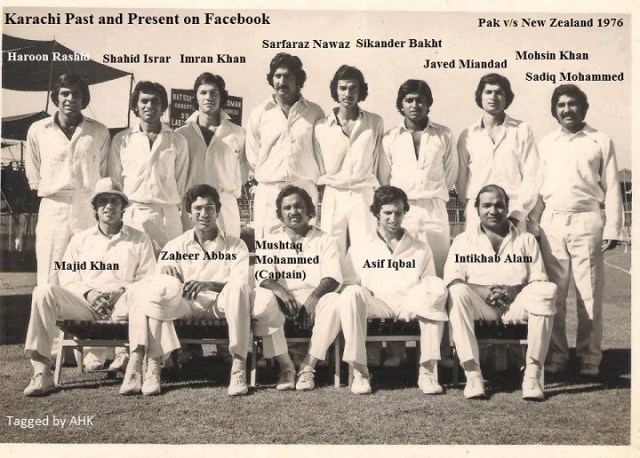
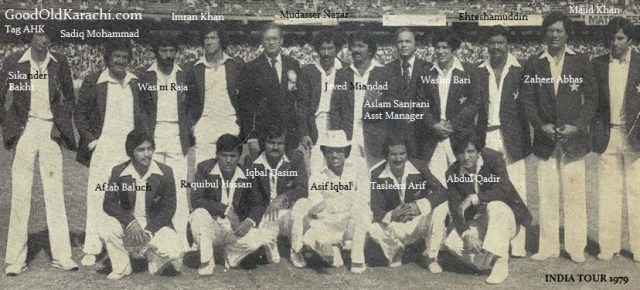
Photo courtesy of Menin Rodriguez. Correction: the player marked Aftab Baluch is actually Talat Mirza. Raquibul Hassan is actually Abdul Raquib.
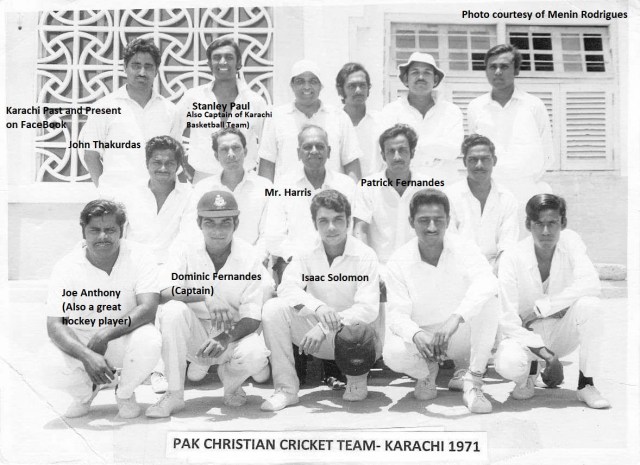
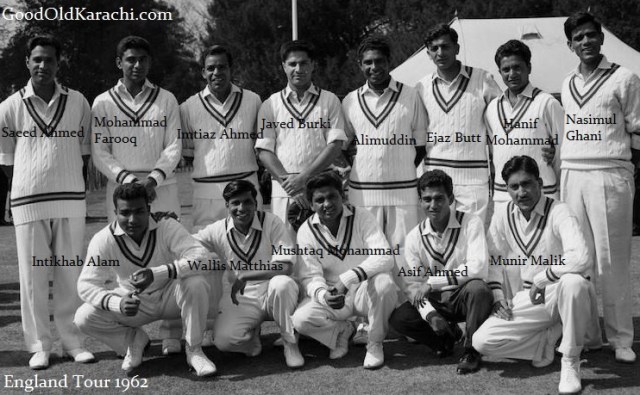
Photo courtesy of Menin Rodrigues and tagged with the help of Dr. Salman Faridi.
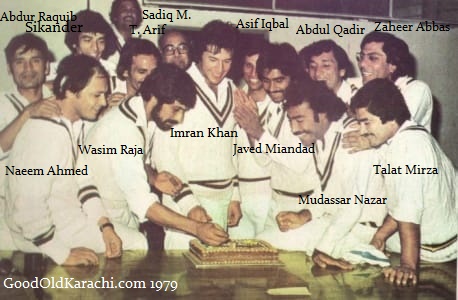
Pakistan Cricket Team in the dressing room during India Tour 1979. Imran Khan’s Birthday being celebrated. Photo and tagging courtesy of Dr. Salman Faridi.
By
Raju Jamil
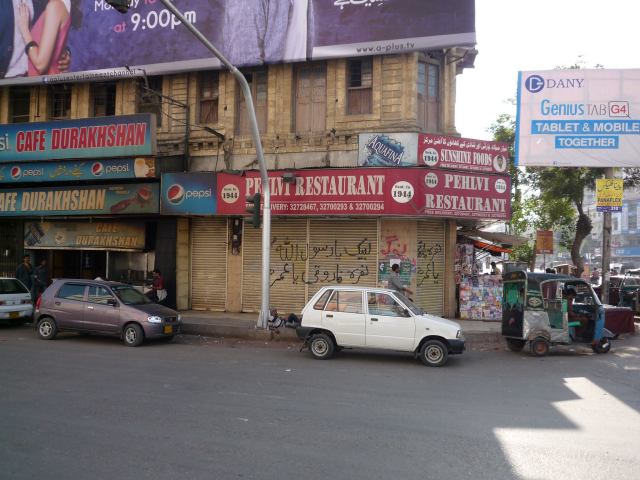
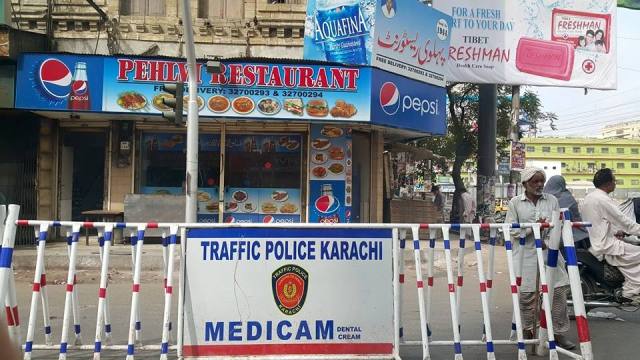
Located at what we yearn and strive for—-the corner plot neighbouring Lyric Cinema on M.A.Jinnah Road Karachi….this restaurant was established in 1955-56.
It was the most visited place and at one time the pak based staff at the American Embassy in Kandawalla Building adjacent to Nishat Cinema regularly had their lunch there.
My first visit to this restaurant was in 1960 with with Garden Road Colony friend Hafeez on eid day when we were to watch “Golaith and the Barbarians” at Lyric. It was walking distance from ours.
After the matinee show..we decided to have some snacks at PEHALVI where we found the service excellent and food awesome…like spicy and tasty…which compelled us to plan the Sunday lunch with more friends at PEHALVI and on that particular..quiet and serene and gulabi Sunday of December 1960 we had the lunch I can never ever forget at PEHALVI ….
We had : Brain Masala, Egg Channa and Daal Maash…with Irani Naans. It is a Persian Restaurant…then owned by an Iranian settler who..we heard… had some partnership in Lucky Irani Circus as well.
Well remembered at PEHALVI is the courtesy and the budget also. We four from Garden Colony had chipped in on equal basis. The total bill was Rs.52/-.
I salute PEHALVI restaurant for keeping up its journey and I am sure they are doing good on the food that they survive witnessing so many happenings at that most popular and now highly infested traffic spot right in the centre point of sangam of M. A. Jinnah Road and Garden Road….which converts to Abdullah Haroon Road coming from Bambino towards Saddar.
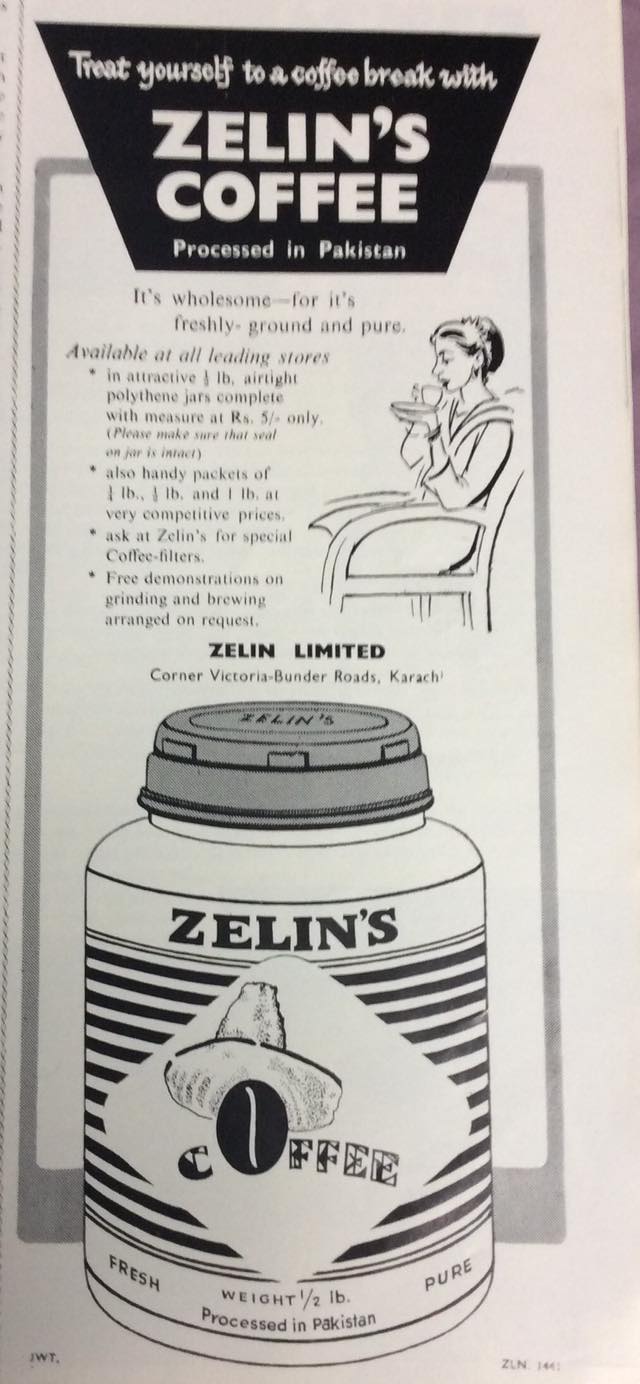
Amazing strikes and jalaow gheraow was the bench mark of that area where…a little ahead of PEHALVI’S left side towards Radio Pakistan was the ever famous POLAD & POLAD bypassing the fondly remembered ZELIN’S corner and the biggest locker branch of HBL. ….not to forget that famous disco “The Hut” above ZELIN’S of Fazalbhouy family.
All these are gone with the winds of change but accolades and kudos to PEHALVI to survive.
Now I am lured to visit the restaurant (after 1960) and try out their dhabba like food…whether it be a risk or refresher of that unforgettable taste of Dec 1960….55 years ago.
The story has it that when Shah Of Iran visited Karachi he was taken in a buggy from Quaid’s Mazar to President House (now Gov House) and at the entrance taking the turn towards the road leading to Elphinstone Street (now Zebunnisa Street.) the buggy cade of Shah with Ayub Khan seated next to him…was stopped for a minute that Raza Shah noted the signboard of PEHALVI restaurant and waved towards the restaurant…..
Jane Kahan Gaye Woh Din….
Raju Jamil.















 Good Old Karachi